10 KVA Alternator Price in India: Complete Buying Guide (2026)

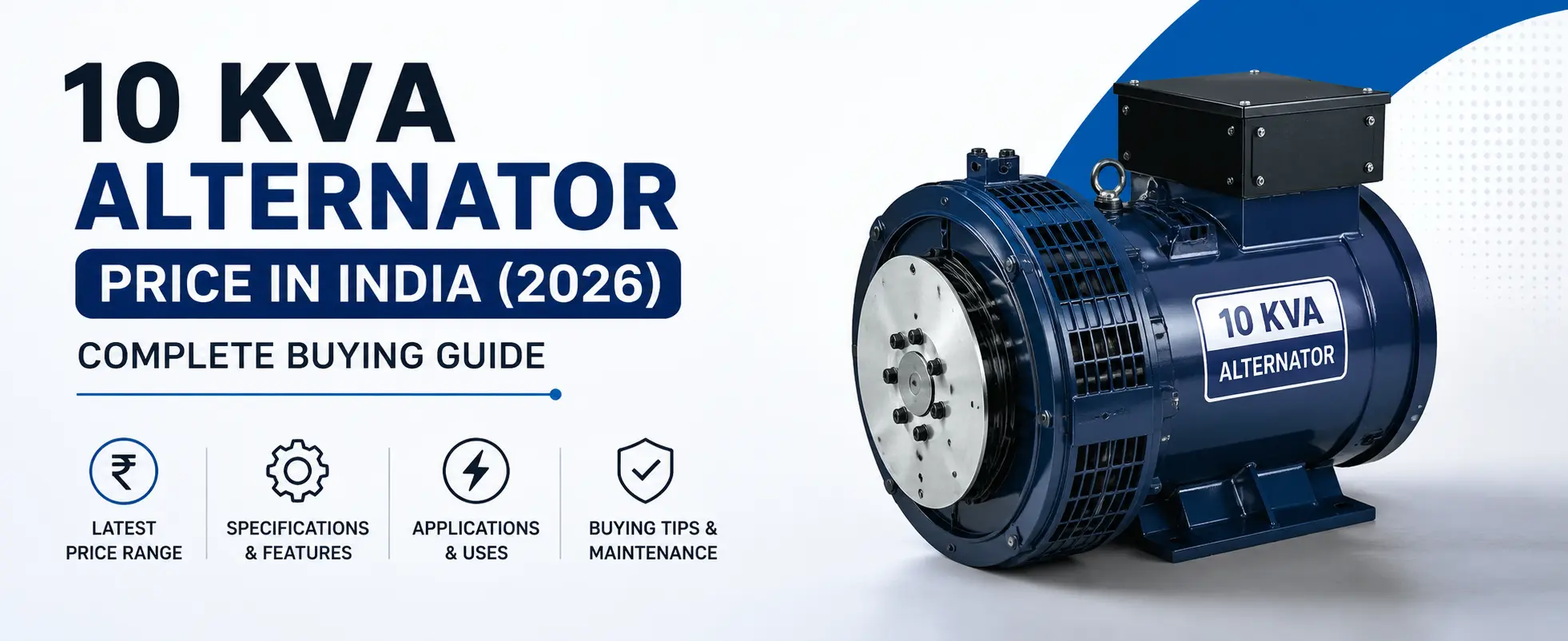
Looking for the latest 10 kva alternator price in India? A 10 KVA alternator typically costs between ₹12,000 and ₹55,000, depending on factors such as phase type, winding material, RPM rating, cooling technology, and brand quality.
A 10 KVA alternator is a popular choice for generator sets, agricultural operations, manufacturing units, construction sites, telecom towers, and commercial backup power systems. It delivers reliable power output while maintaining high efficiency and long-term performance.
However, not all alternators offer the same value. Features like copper or aluminium winding, single-phase or three-phase configuration, brushless technology, and warranty coverage can significantly influence both the purchase cost and operating expenses.
In this guide, you’ll learn everything you need to know about 10 kva alternator price, technical specifications, applications, maintenance requirements, and key factors to consider before buying the right alternator for your needs.
What Is a 10 KVA Alternator?
A 10 KVA alternator is a compact electrical machine designed to produce around 10 kilovolt-amperes. It converts mechanical energy into electrical energy. It is used where reliable backup or continuous power is needed in small to medium load applications.
A 10 kva alternator works on the principle of electromagnetic induction. Inside the unit, the rotor rotates within a magnetic field, and this movement generates alternating current (AC). In an AC alternator, this AC output is then regulated to maintain a stable voltage for a safe and consistent power supply.
When comparing an alternator with a generator, the key difference is in output and efficiency. An alternator specifically produces AC power and delivers higher efficiency, better durability, and lower maintenance needs. A generator, on the other hand, may produce AC or DC power depending on its design and is generally heavier and less efficient.
You will commonly find a 10 KVA alternator in diesel generator sets, small industrial units, and construction equipment. And agricultural setups where steady and dependable power is essential for smooth operations.
10 KVA Alternator Price in India
The 10 kva alternator price in India generally varies based on type, brand, build quality, and application. If you compare the current market, the alternator price is not fixed because different industries demand different specifications and performance levels. A basic unit costs less, while advanced models like brushless versions come at a higher price due to better efficiency and lower maintenance.
The 10 kW alternator price also depends on features like insulation class, cooling system, and phase type. Three-phase models are usually more expensive than single-phase models because they handle higher loads and are widely used in industrial setups.
Market trends show a steady increase in demand for fuel-efficient and low-maintenance alternators, especially in construction, agriculture, and backup power systems. As a result, premium brands and brushless designs are gaining popularity in India.
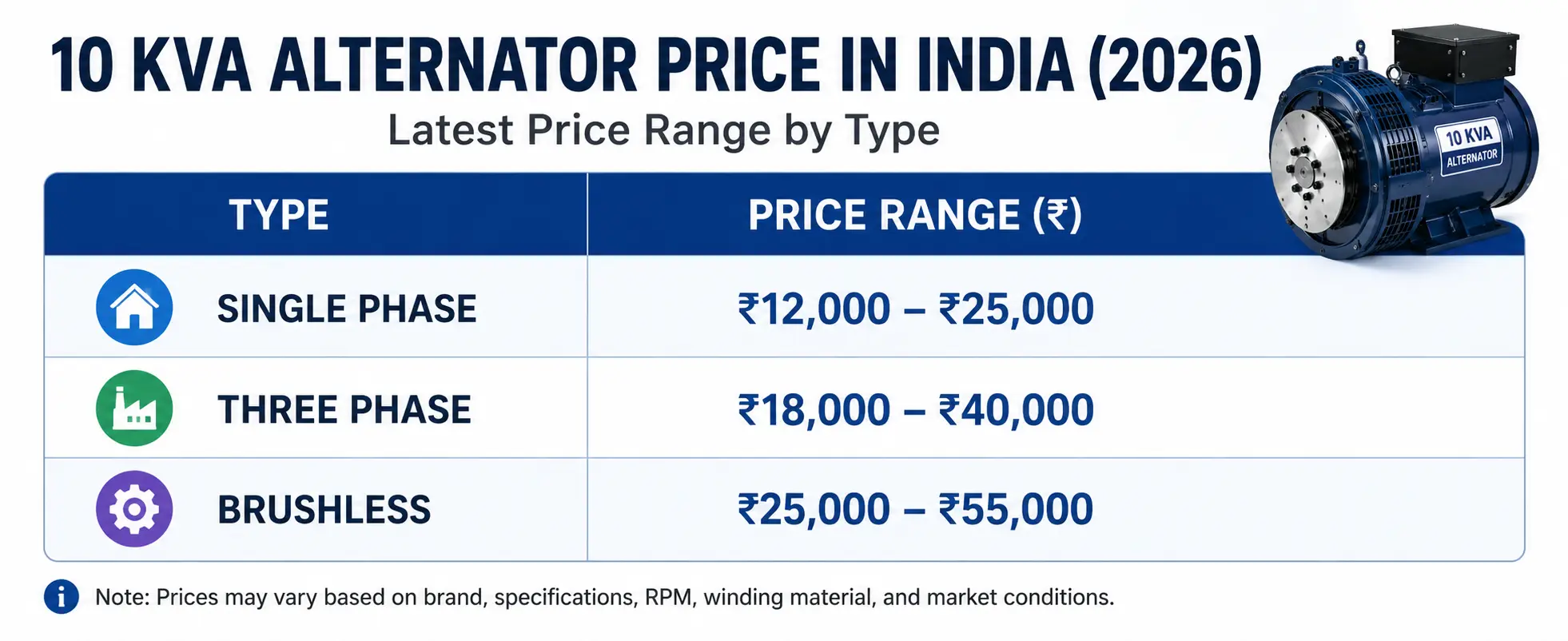
| Type | Price Range (₹) |
|---|---|
| Single Phase | ₹12,000 – ₹25,000 |
| Three Phase | ₹18,000 – ₹40,000 |
| Brushless | ₹25,000 – ₹55,000 |
Factors Affecting 10 KVA Alternator Price
The alternator price and the 10 kva alternator price in India depend on several technical and commercial factors. Each component used in the alternator directly impacts performance, durability, and cost.
Winding Material
Winding material plays a major role in cost and efficiency. Copper winding is more expensive but delivers better conductivity, higher efficiency, and longer life, making it ideal for heavy-duty use. In contrast, aluminium winding is more affordable but slightly less efficient and may heat up faster under load. Because of this difference, copper-wound alternators usually come at a higher 10 kva alternator price.
Phase Type
Phase type also affects pricing significantly. Single-phase alternators are cheaper and used for light residential or small commercial loads. Three-phase alternators cost more because they handle higher power, offer smoother output, and are widely used in industrial applications. Naturally, the alternator price increases as you move from single-phase to three-phase systems.
RPM Rating
RPM rating defines how fast the alternator operates. Higher RPM models generally deliver better output stability but require stronger build quality, which increases cost. Lower RPM units are simpler and cheaper, but may not suit heavy-duty industrial usage, affecting the overall 10 kva alternator price in the market.
Brand Quality
Brand reputation directly impacts pricing. Well-known manufacturers charge more due to better engineering, reliability, and strict quality control. These brands also offer consistent performance and fewer breakdowns. Lesser-known brands may offer lower alternator prices, but they often compromise on durability and after-sales support.
Cooling Technology
Cooling technology improves efficiency and lifespan. Advanced air-cooled or fan-assisted systems prevent overheating during continuous operation. Better cooling systems increase manufacturing cost, which raises the final 10 kva alternator price. Basic cooling models are cheaper but may not perform well under long or heavy load conditions.
Warranty & Support
Warranty and after-sales support also influence pricing. Products with longer warranty periods and strong service networks usually cost more. This added value ensures better reliability and reduced maintenance costs over time. Buyers often prefer such models even if the initial alternator price is slightly higher, for long-term peace of mind.
Single Phase 10 KVA Alternator Price
The single phase 10 kva alternator is a popular choice for residential, commercial, and light industrial applications that require reliable power output. In India, the 10 kva alternator price for single-phase models typically ranges from ₹12,000 to ₹25,000, depending on the winding material, brand, and build quality.
One of the biggest advantages of a single-phase alternator is its simple installation, lower cost, and easy maintenance. It provides stable power for lighting systems, small machinery, offices, and shops, as well as backup power solutions.
This type of alternator is highly recommended for retail stores, agricultural operations, small workshops, and telecom sites. And residential generator sets where heavy industrial loads are not required. Buyers looking for an affordable and efficient power solution often prefer single-phase 10 KVA alternators.
Three Phase 10 KVA Alternator Price
A three phase alternator is designed to deliver consistent power output for applications that require higher efficiency and balanced electrical loads. Compared to single-phase models, a three-phase alternator offers smoother operation, better voltage regulation, and improved performance under continuous use.
In India, the 10 kva alternator price for three-phase models generally ranges from ₹18,000 to ₹40,000 or more, depending on factors such as winding material, RPM rating, cooling technology, and brand reputation. Premium brushless models may cost even more due to their superior efficiency and lower maintenance requirements.
Three-phase alternators are widely used in industrial environments where machinery, motors, pumps, compressors, and production equipment require a stable power supply. They are also a preferred choice for commercial facilities such as office buildings, hotels, hospitals, warehouses, and large retail establishments that operate multiple electrical systems simultaneously.
10 KVA vs 10 KW Alternator
Understanding this difference helps you compare the 10 kva alternator price and 10 kw alternator price more accurately before making a purchase.
| Feature | 10 KVA Alternator | 10 KW Alternator |
|---|---|---|
| Output | 10 KVA (Apparent Power) | 10 KW (Real Power) |
| PF (Power Factor) | Typically 0.8 PF | Based on actual power output |
| Usage | Generator and alternator sizing | Equipment power consumption |
| Cost | Generally lower for equivalent rating | Usually higher due to greater real power output |
Technical Specifications of 10 KVA Alternator
Before purchasing a 10 kva alternator, it is important to review its technical specifications. These parameters determine performance, compatibility, and efficiency across different applications. While specifications may vary by manufacturer, most 10 KVA alternators follow the standards below.
| Specification | Details |
|---|---|
| Voltage | 230V (Single Phase) / 415V (Three Phase) |
| RPM | 1500 RPM or 3000 RPM |
| Frequency | 50 Hz |
| Phase | Single Phase or Three Phase |
| Insulation Class | Class H or Class F |
| Cooling | Air-Cooled or Fan-Assisted Cooling |
Applications of 10 KVA Alternators
A 10 KVA alternator is a versatile power solution used across multiple industries. Whether you need an industrial alternator for continuous operations or a reliable backup power source.
Construction Sites
Power tools, lighting systems, and temporary site offices where grid power is unavailable.
Agriculture
Supports irrigation pumps, farm equipment, and storage facilities, ensuring uninterrupted agricultural operations.
Manufacturing Units
An industrial alternator helps run small machinery, compressors, and production equipment during power outages.
Telecom Towers
Provides dependable backup power to keep communication networks operational around the clock.
Hospitals
Supplies emergency power for essential medical equipment, lighting, and support systems during outages.
Commercial Buildings
Used in offices, retail stores, and business complexes to maintain smooth operations and prevent downtime.
How to Choose the Right 10 KVA Alternator
Choosing the right 10 kva alternator starts with understanding your power requirements. First, calculate your total load requirement to ensure the alternator can handle your equipment without overload. Next, check the voltage requirement and select a model compatible with your generator and electrical system.
Phase selection is equally important. Choose a single-phase alternator for light-duty applications and a three-phase model for industrial or commercial operations.
Finally, evaluate the manufacturer’s service network, warranty coverage, and after-sales support. A slightly higher upfront investment often delivers better reliability, reduced maintenance costs, and long-term value.
Maintenance Tips for Long Alternator Life
Proper alternator maintenance is essential if you want to maximise performance, reduce downtime, and extend the lifespan of your 10 KVA alternator.
Regular Cleaning
Dust, dirt, and moisture can affect cooling efficiency and electrical performance. Clean the alternator housing, air vents, and surrounding area regularly to prevent debris buildup. Always follow the manufacturer’s cleaning recommendations.
Bearing Inspection
Bearings experience continuous mechanical stress during operation. Check for unusual noise, vibration, or excessive heat, as these may indicate bearing wear. Replacing worn bearings early can prevent major mechanical failures.
Voltage Testing
Routine voltage testing helps identify performance issues before they become serious problems. Monitor output voltage and frequency to ensure the alternator delivers stable power.
Cooling System Checks
Overheating is one of the leading causes of alternator failure. Inspect cooling fans, ventilation openings, and air passages regularly. Ensure there are no blockages restricting airflow, especially in dusty industrial environments.
Preventive Maintenance
Create a preventive maintenance schedule that includes visual inspections, electrical testing, lubrication checks, and component tightening.
By following these alternator maintenance practices, businesses can improve reliability, reduce repair costs, and ensure consistent power generation for years to come.
Why Choose [Company Name] for 10 KVA Alternators?
When investing in a 10 KVA alternator, quality and reliability matter as much as the 10 kva alternator price. At [Company Name], we focus on delivering high-performance alternators that provide consistent power, long service life, and excellent value for money.
Every alternator undergoes rigorous quality testing to ensure dependable performance under demanding operating conditions. We use premium-grade copper winding for superior conductivity, better efficiency, and enhanced durability compared to standard alternatives.