Delhi EV Policy 2026: Subsidies, Zero Road Tax, Registration Rules & Key Changes Explained

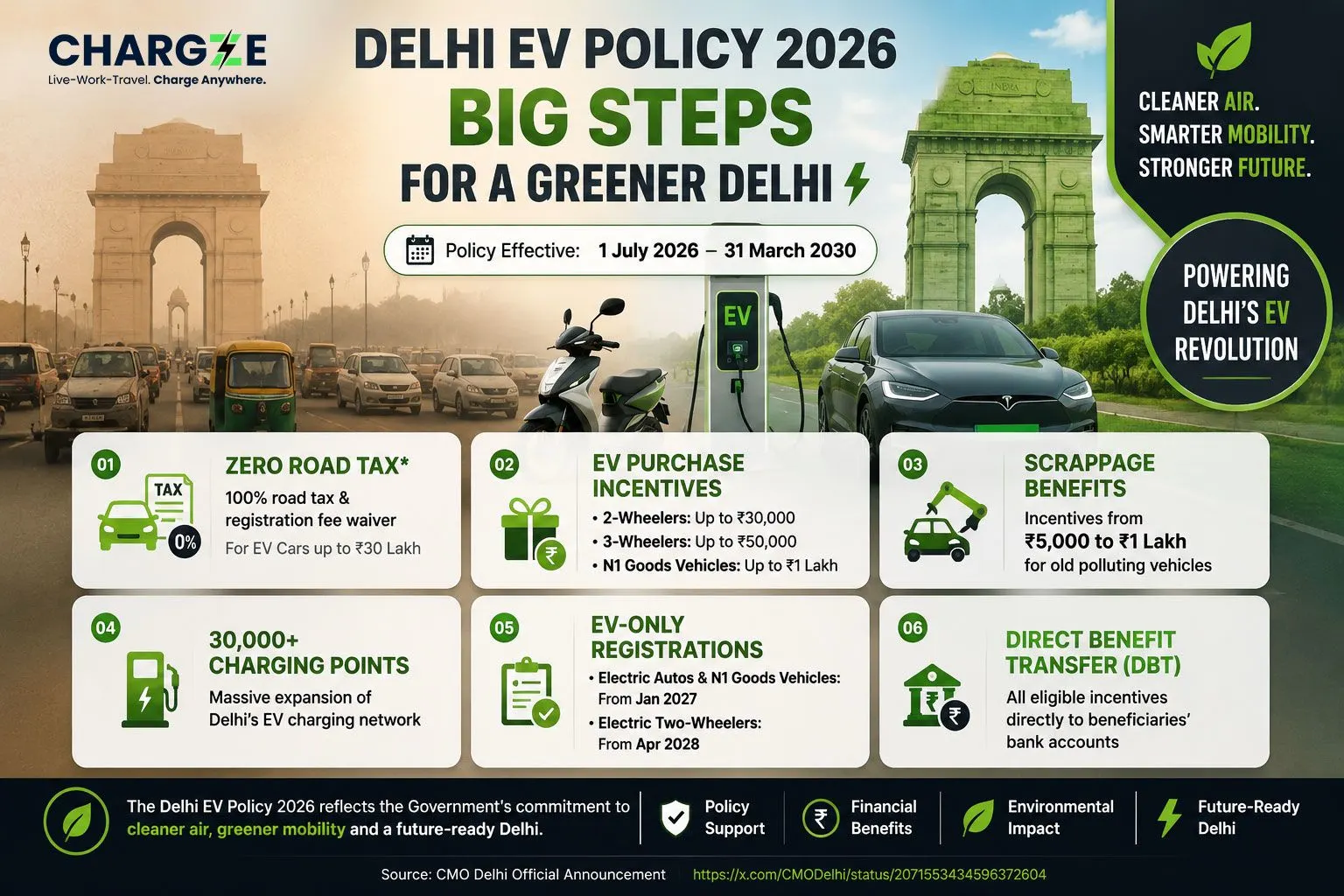
The Delhi EV Policy 2026 marks a significant step towards making electric vehicles more affordable and accelerating clean mobility across the capital. Effective from 1 July 2026, the policy introduces purchase subsidies, zero road tax, registration fee waivers, scrappage incentives, and a major expansion of EV charging infrastructure.
It also outlines a phased transition away from certain petrol-powered vehicles to help reduce air pollution and encourage wider EV adoption.
Suppose you are planning to buy an electric vehicle or want to understand how the new rules affect existing vehicle owners. You will learn about the latest incentives, eligibility criteria, registration rules, charging infrastructure plans, and the key changes introduced under the Delhi EV Policy 2026.
What Is the Delhi EV Policy 2026?
Delhi EV Policy 2026 is the Delhi Government’s updated electric mobility policy designed to accelerate the adoption of electric vehicles, reduce air pollution, and expand EV charging infrastructure. The policy benefits individual buyers, commercial fleet operators, and businesses through incentives, tax benefits, and measures that encourage a faster shift from petrol and diesel vehicles to EVs.
Delhi EV Policy 2026 at a Glance
The Delhi EV Policy 2026 is a four-year roadmap that aims to accelerate electric vehicle adoption, reduce air pollution, and build a stronger EV ecosystem across the capital.
The policy also introduces a phased transition away from new petrol-powered vehicles in selected categories, encouraging cleaner and more sustainable mobility.
| Feature | Details |
|---|---|
| Effective Date | 1 July 2026 |
| Duration | Until 31 March 2030 |
| Budget | ₹15,000 crore investment for EV adoption and infrastructure |
| Road Tax | 100% waiver for eligible electric vehicles, including EV cars priced up to ₹30 lakh |
| Registration Fee | 100% waiver for eligible EVs |
| Subsidy | Purchase incentives vary by vehicle category, including electric two-wheelers, three-wheelers, commercial vehicles, and select electric cars through tax benefits |
| Scrappage Incentive | Up to ₹1 lakh for eligible buyers who scrap older ICE vehicles |
| Charging Infrastructure | Around 30,000 public EV charging points planned across Delhi |
| Vehicle Categories | Electric two-wheelers, three-wheelers, passenger cars, commercial vehicles, buses, and goods carriers |
| Petrol Vehicle Restrictions | New electric auto-rickshaw registrations from 1 January 2027. New petrol/CNG two-wheeler registrations end from 1 April 2028. Existing vehicles can continue operating under current rules |
Why Did Delhi Introduce the New EV Policy?
The Delhi electric vehicle policy aims to speed up the transition to clean transportation while addressing the city’s growing environmental and economic challenges. Delhi continues to face severe air pollution, and road transport remains a major contributor to vehicle emissions.
Therefore, the government is encouraging electric mobility by making EVs more affordable through incentives, tax benefits, and expanded charging infrastructure.
In addition, the policy supports India’s long-term climate and net-zero goals by reducing dependence on petrol and diesel vehicles. Greater EV adoption can also lower fuel imports, reduce running costs for individuals and businesses, and improve energy security.
Key Highlights of Delhi EV Policy 2026
Here are the key highlights of the Delhi EV policy.
Expanded Purchase Incentives
The policy continues financial support for eligible EV buyers through subsidies, road tax exemptions, registration fee waivers, and scrappage incentives. These benefits reduce the upfront cost of owning an electric vehicle and encourage more people to switch from petrol and diesel models.
Stronger Focus on Charging Infrastructure
The government plans to significantly expand Delhi’s public EV charging network by installing thousands of new charging points across residential areas, commercial hubs, workplaces, and public parking spaces.
Phased Restrictions on Petrol Vehicles
The policy introduces a gradual transition away from new petrol-powered vehicles in selected categories. For example, new electric auto-rickshaw registrations will become mandatory from 2027, while new petrol and CNG two-wheeler registrations are expected to stop from 2028.
Support for Commercial and Public Transport
The policy promotes the electrification of buses, taxis, goods carriers, and commercial fleets.
Digital and Transparent EV Ecosystem
The government also plans to simplify the ownership experience through digital application processes, transparent incentive distribution, and better monitoring of charging infrastructure.
100% Road Tax Exemption
The Delhi EV Policy 2026 offers a 100% road tax exemption for eligible electric vehicles, reducing the upfront cost of buying an EV. This benefit applies to qualifying electric two-wheelers, three-wheelers, commercial vehicles, and electric cars that meet the policy’s eligibility criteria. However, buyers must satisfy the government’s conditions, such as vehicle category and price limits where applicable.
Registration Fee Waiver
Eligible buyers also receive a registration fee waiver, making EV ownership more affordable from day one. Under the Delhi EV registration rules, qualifying electric vehicles are exempt from paying registration charges. This benefit is available alongside road tax exemptions for approved vehicle categories.
Purchase Subsidies
The Delhi electric vehicle subsidy helps reduce the purchase price of eligible EVs. The subsidy amount varies by vehicle category and is subject to the conditions notified by the Delhi Government.
| Vehicle Category | Purchase Subsidy |
|---|---|
| Electric Two-Wheelers | As notified by the government (subject to eligibility) |
| Electric Three-Wheelers | Category-wise subsidy available |
| Commercial EVs | Eligible incentives based on vehicle type |
| Electric Cars | No direct purchase subsidy announced; eligible models receive road tax and registration fee benefits where applicable |
Vehicle Scrappage Incentives
The vehicle scrappage incentive encourages owners to replace older petrol or diesel vehicles with cleaner electric alternatives.
| Vehicle Replaced | Scrappage Incentive |
|---|---|
| Old Two-Wheeler | Eligible incentive as notified |
| Old Three-Wheeler | Higher category-wise incentive |
| Old Commercial Vehicle | Enhanced incentive based on vehicle type |
| Maximum Benefit | Up to ₹1 lakh for eligible categories |
Petrol Vehicle Phase-Out Timeline
The EV Policy 2026 Delhi does not ban existing petrol vehicles immediately. Instead, it introduces a phased transition for new vehicle registrations in selected categories. Existing registered vehicles can continue to operate under current regulations.
| Timeline | Key Change |
|---|---|
| 1 July 2026 | Delhi EV Policy 2026 comes into effect. |
| 1 January 2027 | Only new electric auto-rickshaw registrations permitted. |
| 1 April 2028 | New petrol and CNG two-wheeler registrations are proposed to end. |
| By 2030 | Continued expansion of EV adoption, charging infrastructure, and public transport electrification. |
How Will Delhi EV Policy Affect Existing Petrol and Diesel Vehicle Owners?
If you already own a petrol or diesel vehicle, you can continue using it as long as it complies with existing registration, fitness, and emission rules. The Delhi EV Policy 2026 targets new vehicle registrations, not vehicles that are already registered. Therefore, current owners do not have to replace their vehicles immediately.
However, future restrictions will gradually limit the registration of new petrol-powered vehicles in certain categories. As these changes take effect, buyers may need to choose an electric alternative instead. In addition, the policy offers scrappage incentives for eligible owners who voluntarily replace older petrol or diesel vehicles with EVs.
Delhi EV Registration Rules Explained
The Delhi EV registration rules follow the standard vehicle registration process, with additional benefits for eligible electric vehicles. Buyers must register their EV through the dealer or the Delhi Transport Department by submitting documents such as proof of identity, proof of address, invoice, insurance certificate, and valid KYC documents.
Most registrations are processed online through the VAHAN portal and the Transport Department’s digital services, making the process faster and more convenient.
Eligible EVs receive registration fee exemptions under the policy, reducing the overall purchase cost. However, buyers should verify the latest eligibility conditions and required documents before applying to ensure they receive all available benefits.
How the Policy Will Expand Delhi's Charging Infrastructure
The government plans to install thousands of new Delhi EV charging stations across residential areas, commercial complexes, office buildings, public parking spaces, and major roads.
In addition, the policy encourages battery swapping for compatible electric two- and three-wheelers, reducing charging time for commercial users. It also promotes charging facilities in apartments, workplaces, and commercial buildings to support growing EV adoption.
Furthermore, the government plans to expand fast-charging infrastructure for quicker top-ups and explore vehicle-to-grid (V2G) technology.
Benefits of the Delhi EV Policy
The Delhi EV Policy 2026 aims to make electric mobility more affordable, accessible, and sustainable. Key advantages include:
- Lower ownership costs through EV incentives, including eligible road tax exemptions, registration fee waivers, and purchase benefits.
- Reduced running and maintenance expenses compared to most petrol and diesel vehicles.
- Cleaner air by encouraging the use of zero-tailpipe-emission electric vehicles.
- Lower carbon emissions support Delhi’s environmental and climate goals.
- More charging stations and battery-swapping facilities make EV charging faster and more convenient.
- Greater EV adoption by improving affordability and reducing range anxiety.
- Economic growth through increased investment in EV manufacturing and charging infrastructure.
- Reduced dependence on fossil fuels improves long-term energy security.
- Better public transport through electrification of buses, fleets, and last-mile mobility services.
Bottom Line
The Delhi EV Policy 2026 is a roadmap to accelerate electric mobility and reduce air pollution in the national capital. It introduces financial benefits such as eligible purchase subsidies, 100% road tax exemptions, registration fee waivers, and scrappage incentives to make EV ownership more affordable.
In addition, it focuses on expanding public charging stations, battery-swapping facilities, fast chargers, and apartment charging to improve convenience for EV owners.
Overall, the policy benefits individual buyers, businesses, commercial fleet operators, and public transport by lowering ownership costs, supporting cleaner transportation, and creating jobs. If you plan to buy an electric vehicle in Delhi, the eligibility criteria, available incentives, registration rules, and implementation timeline.