BEV vs EV: What’s the Real Difference?

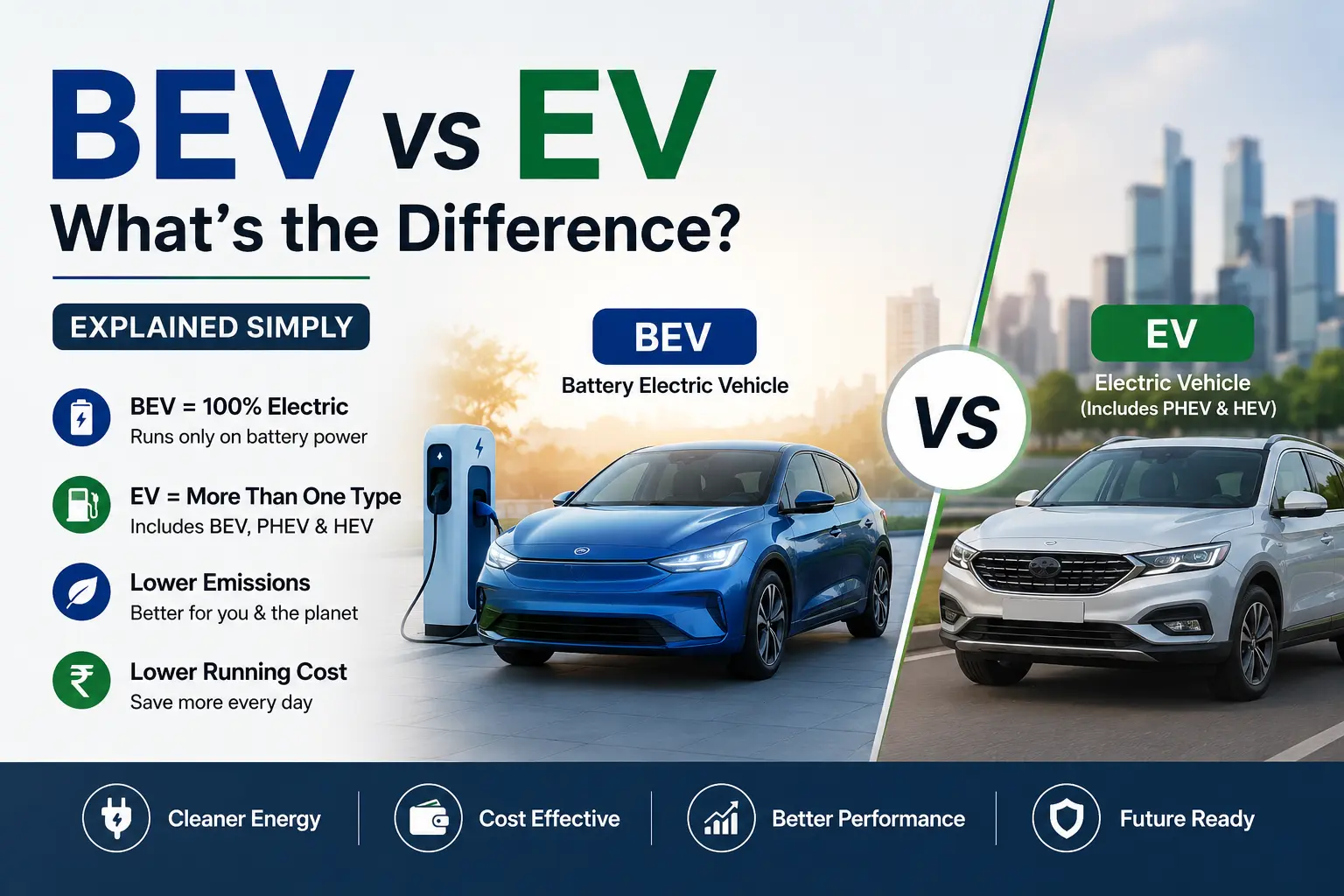
A BEV is a specific type of EV. All BEVs are EVs, but not all EVs are BEVs. An EV, or electric vehicle, is any vehicle powered partly or fully by electricity, including hybrids. A BEV, or battery electric vehicle, runs entirely on battery power. It uses no petrol or diesel and produces zero tailpipe emissions.
Understanding the Terms
- EV (Electric Vehicle): A broad category for any vehicle powered partly or fully by electricity. It includes battery electric vehicles, hybrid electric vehicles, and plug-in hybrid electric vehicles.
- BEV (Battery Electric Vehicle): A fully electric vehicle that runs entirely on a rechargeable battery pack. It uses no petrol or diesel and produces zero tailpipe emissions.
Key Differences
- Fuel Source: BEVs run on 100% electricity and must be plugged in to charge. PHEVs and HEVs combine petrol with an electric motor for assist.
- Maintenance: BEVs have fewer moving parts, since they skip the engine, oil changes, and exhaust system entirely.
- Environmental Impact: BEVs produce zero direct emissions. Hybrids still burn fuel during regular operation.
- Charging Dependency: BEVs rely fully on charging access, at home or on public networks. PHEVs and HEVs don’t share this dependency, since they can run on petrol alone.
- Running Cost in India: Home-charged BEVs cost around ₹1 to ₹1.5 per km to run. Petrol and hybrid vehicles cost ₹5.5 to ₹7 per km at current fuel prices. This gap widens further on public fast charging, though it still stays well below petrol costs.
Types of EVs Beyond BEV: PHEV and HEV Explained
A Plug-in Hybrid Electric Vehicle (PHEV) combines a petrol engine with an electric motor and a rechargeable battery. You can drive short distances on electric power alone, then rely on the petrol engine for longer trips. This flexibility suits drivers who want lower running costs without full dependence on charging infrastructure.
A Hybrid Electric Vehicle (HEV) also pairs a petrol engine with an electric motor, but it cannot be plugged in. Instead, it recharges its small battery through regenerative braking and the engine itself. HEVs offer better fuel efficiency than a standard petrol car, though they don’t match the running costs or emissions benefits of a BEV.
BEV vs PHEV vs HEV: Quick Comparison
Here’s how the three types stack up on the factors that matter most for Indian buyers: fuel source, charging needs, emissions, and everyday use.
| Type | Power Source | Charging Needed | Emissions | Ideal Use Case |
|---|---|---|---|---|
| BEV | 100% electric battery | Yes, regularly | Zero tailpipe emissions | Daily city driving with home or public charging access |
| PHEV | Petrol engine + electric motor | Yes, optional | Low, higher on petrol mode | Mixed city and highway driving |
| HEV | Petrol engine + electric motor | No | Lower than petrol, still emits | Drivers without charging access |
Charging Infrastructure: Why It Matters More for BEVs
A BEV owner has no fallback fuel option. Every trip depends on either a home charger or a nearby public charging station. This makes charging access the single biggest factor in whether a BEV fits your daily routine, more than range or price.
PHEV and HEV owners don’t face this pressure, since petrol always backs them up. But as India’s charging network expands across cities and highways, this gap is closing fast. Finding a reliable station near your home, office, or route is easier today than it was even a year ago.
Before you choose a BEV, check the charging density in your area. You can use Chargze’s charging station finder to see live stations near you and plan your charging around your daily driving pattern.
Popular BEV, PHEV, and HEV Models in India
Seeing real models makes the BEV vs EV distinction easier to apply. Here’s what’s available across each category in the Indian market right now.
Popular BEVs in India:
- Tata Nexon EV
- Tata Punch EV
- MG Windsor EV
- Hyundai Creta Electric
- Mahindra BE 6
Popular HEVs (strong hybrids) in India:
- Toyota Innova HyCross
- Toyota Urban Cruiser Hyryder
- Maruti Suzuki Grand Vitara
- Honda City e:HEV
PHEVs in India:
PHEVs remain limited to the luxury segment for now, with models like the Volvo XC60 Recharge and BMW X5 xDrive45e. More affordable, mass-market PHEV options are expected to launch through late 2026 as new entrants join the segment.
How BEV Charging Works: AC vs DC, Home vs Public
BEV charging comes in two main types. AC charging is the slower, everyday option, typically used at home overnight. It usually takes several hours for a full charge, depending on your car’s battery size and charger capacity.
DC fast charging is what you’ll find at public stations, highways, and malls. It charges much faster, often reaching 80% in under an hour, making it useful for longer trips or top-ups on the go.
Most BEV owners rely on a mix of both: home AC charging for daily routines, and public DC charging for longer drives. You can filter by charger type and check real-time availability using the Chargze app, so you always know what’s nearby before you need it.
Conclusion
Every BEV is an EV, but not every EV is a BEV. That single distinction shapes everything from running cost to charging habits to daily convenience. If you’re leaning toward a BEV, your next step is simple: check charging access near you before you decide.
Use the Chargze charging station finder to see live stations in your city, or explore the Chargze app to plan your charging around your daily routine.
Frequently Asked Questions
Is BEV and EV the same thing?
No, a BEV is a type of EV, not the same thing. EV is the broad category covering any vehicle powered partly or fully by electricity. BEV refers specifically to vehicles that run entirely on battery power, with no petrol or diesel involved.
What is the difference between BEV and hybrid EV?
A BEV runs only on electricity and must be charged to move. A hybrid EV, whether PHEV or HEV, combines a petrol engine with an electric motor, so it doesn’t depend fully on charging to function.
Do BEVs need more charging stations than PHEVs?
Yes, BEVs depend entirely on charging access since they have no petrol backup. PHEVs need charging far less often, since their petrol engine takes over once the battery runs low.
Is a BEV or hybrid better for Indian roads?
It depends on your driving pattern and charging access. A BEV suits city driving with home or public charging nearby, while a hybrid suits highway commuters or drivers without reliable charging access.