Automotive Charging: How Vehicle Charging Systems and EV Charging Work

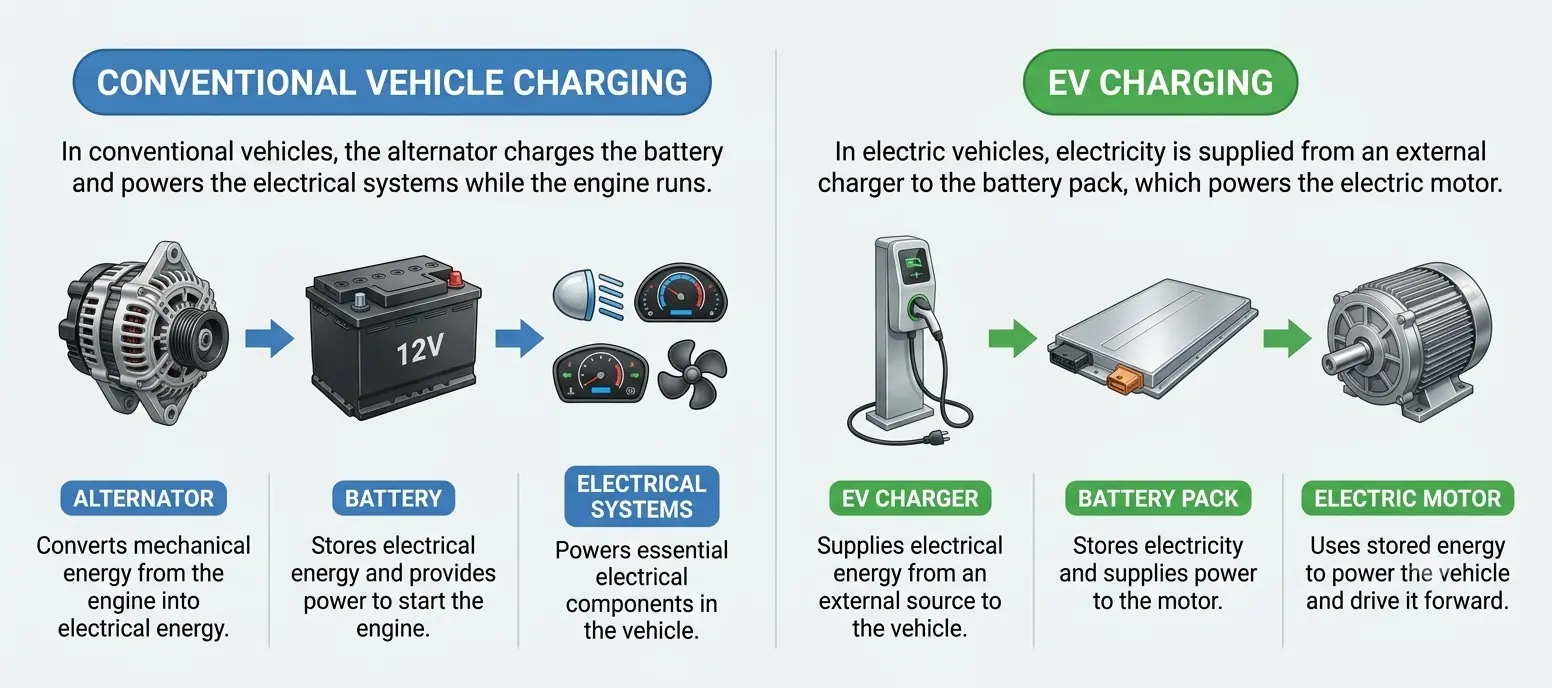
Automotive charging is the process of supplying and managing electrical power in vehicles. In conventional vehicles, the automotive charging system uses components such as the alternator, battery, and voltage regulator to keep the battery charged and power essential electrical systems.
In electric vehicles (EVs), automotive charging involves transferring electricity from a charging station to the vehicle’s battery pack. A reliable charging system is essential for vehicle performance, safety, and efficiency. Without proper charging, a vehicle may experience battery failures, starting problems, or reduced functionality.
As EV adoption continues to grow, understanding automotive charging has become increasingly important for drivers, fleet operators, and businesses. This blog explains how automotive charging systems work, the different types of EV charging, common charging issues, and the technologies shaping the future of vehicle charging.
What Is Automotive Charging?
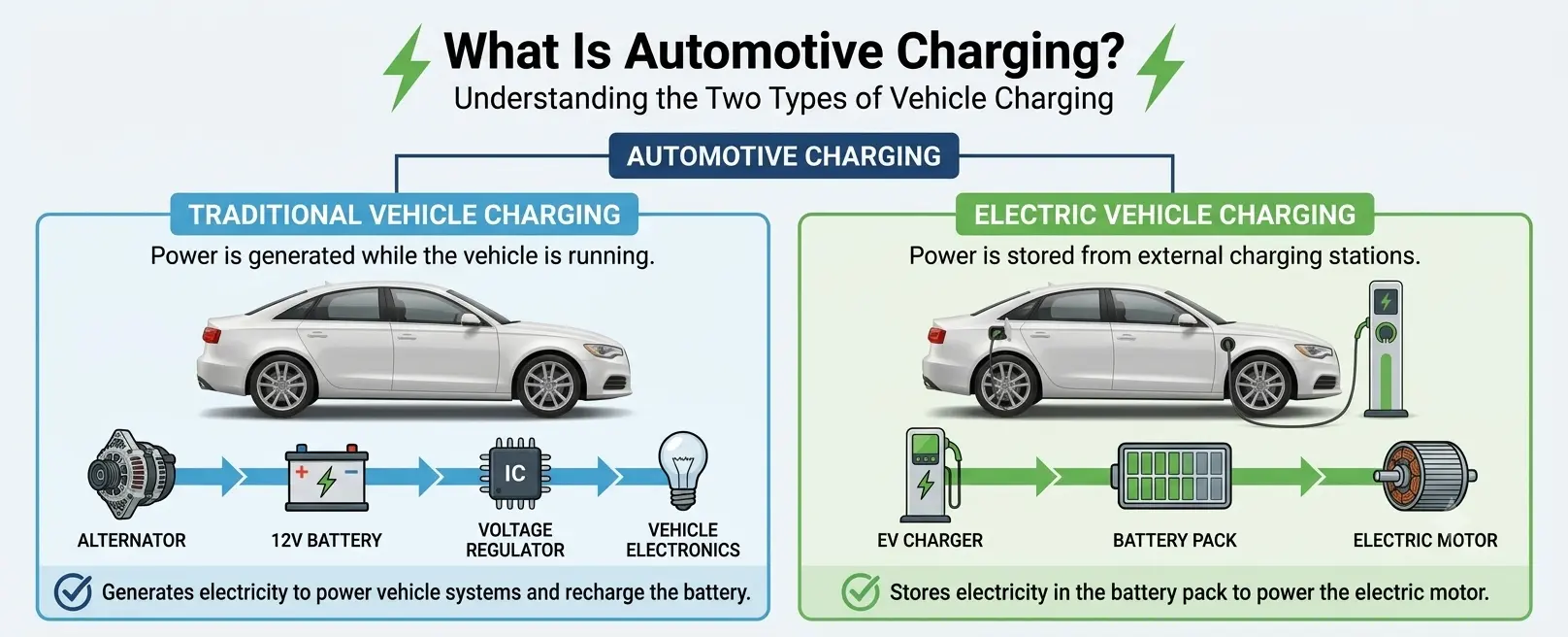
Automotive charging is the process of supplying and managing electrical energy in a vehicle. It ensures that the battery remains charged and that all electrical systems receive the power they need to operate. The term covers both traditional vehicle charging systems and electric vehicle (EV) charging technologies.
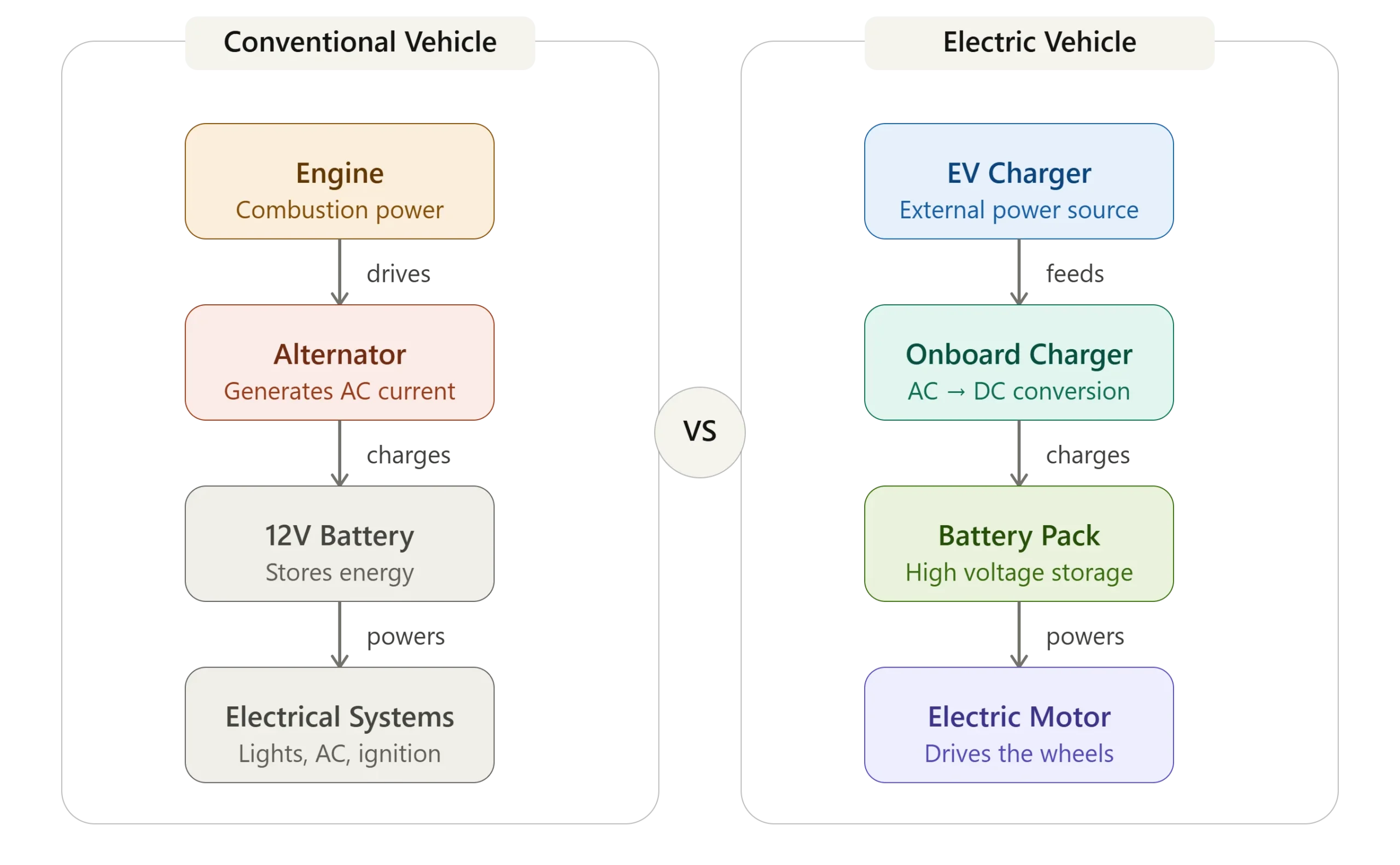
In conventional vehicles, the vehicle charging system relies on an alternator, battery, and voltage regulator. When the engine is running, the alternator generates electricity to power components such as headlights, infotainment systems, and climate controls while also recharging the battery. This helps maintain a stable power supply throughout the vehicle.
In electric vehicles, automotive charging works differently. Instead of generating electricity through an engine-driven alternator, EVs receive power from external charging stations. Electricity is transferred to the vehicle’s battery pack, which stores energy and powers the electric motor.
Charging systems play a critical role in vehicle performance and reliability. A properly functioning charging system prevents battery drain, supports essential electronics, and helps avoid unexpected breakdowns. As electric mobility continues to expand, understanding automotive charging is becoming increasingly important for drivers, businesses, and fleet operators looking to improve efficiency and reduce operating costs.
Charging System in an Automobile
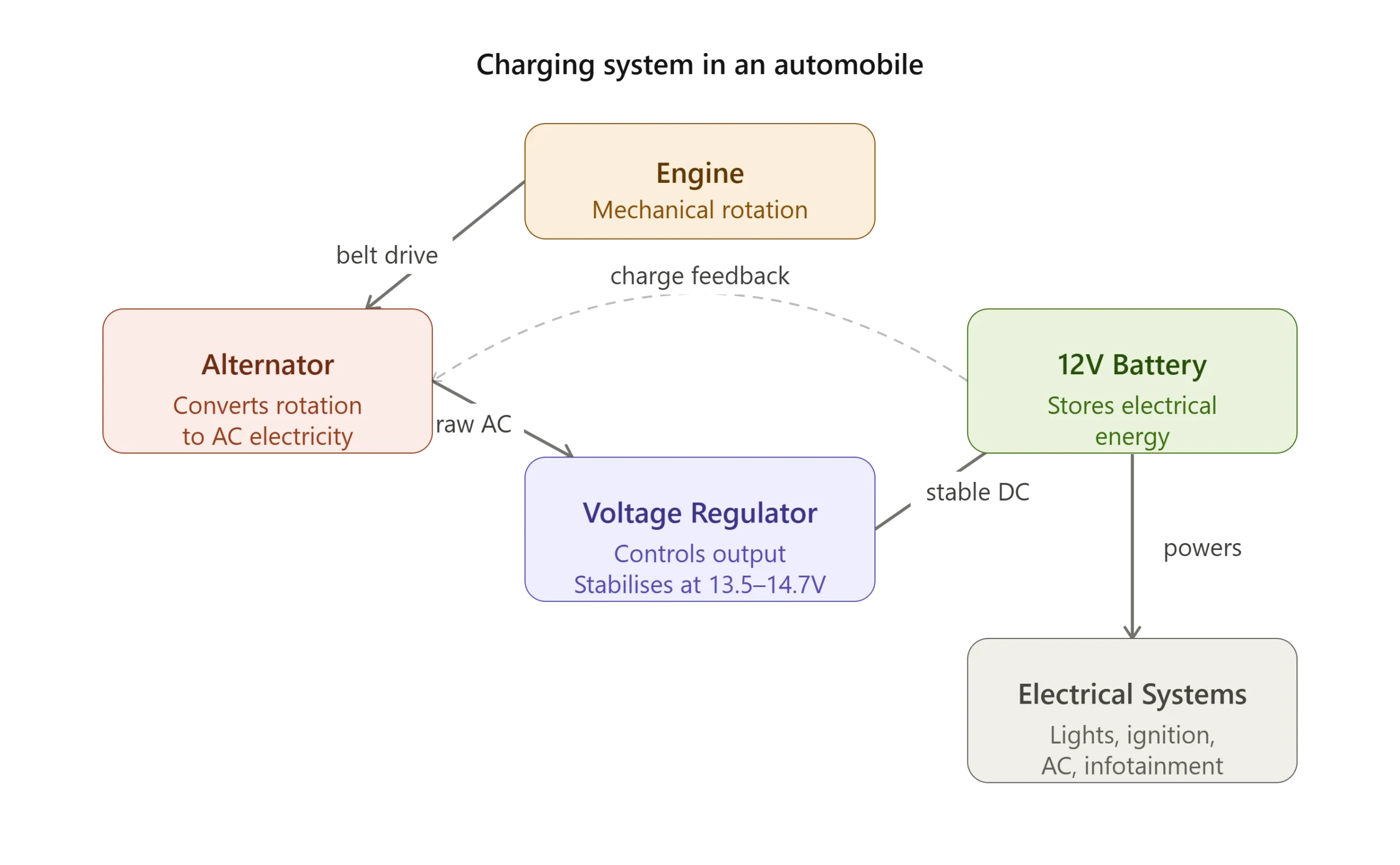
The three main parts of an automotive charging system are the alternator, battery, and voltage regulator.
Alternator
The alternator is the heart of the alternator charging system. It converts mechanical energy from the engine into electrical energy whenever the vehicle is running. This electricity powers the vehicle’s electrical systems and recharges the battery at the same time.
Without a functioning alternator, the battery would quickly lose power, causing electrical components to fail and eventually preventing the engine from starting. Most modern vehicles operate with an alternator output of approximately 13.5 to 14.5 volts.
Battery
The battery stores electrical energy and provides the power needed to start the engine. During ignition, it delivers a burst of electricity to the starter motor and other critical systems.
Once the engine starts, the alternator takes over most of the electrical workload and replenishes the energy used during startup. Effective automotive battery charging helps maintain battery health, improves reliability, and reduces the risk of unexpected breakdowns.
Voltage Regulator
The voltage regulator controls how much electricity the alternator produces. Its primary job is to maintain a stable voltage level and prevent overcharging or undercharging of the battery.
If the voltage is too high, the battery and electronic components can be damaged. If it is too low, the battery may not receive enough charge. By continuously adjusting the alternator’s output, the voltage regulator ensures the automotive charging system operates safely and efficiently under different driving conditions.
How Electric Vehicle Charging Works
Electric vehicle charging is the process of transferring electricity from a power source to an EV’s battery pack. Unlike conventional vehicles that generate electricity through an alternator while the engine runs. EVs rely on external chargers to replenish battery energy. The stored electricity then powers the vehicle’s electric motor.
One of the key concepts in EV charging is the difference between AC and DC charging. Most homes and businesses supply Alternating Current (AC) electricity. During AC charging, the vehicle’s onboard charger converts this power into Direct Current (DC), which the battery can store. DC charging skips this conversion step by delivering DC power directly to the battery, resulting in much faster charging speeds.
The battery charging process is managed by a Battery Management System (BMS). This system monitors battery temperature, voltage, and charging levels to ensure safe and efficient operation. As the battery approaches full capacity, charging speeds may slow down to protect battery health and extend its lifespan.
Types of EV Charging Stations
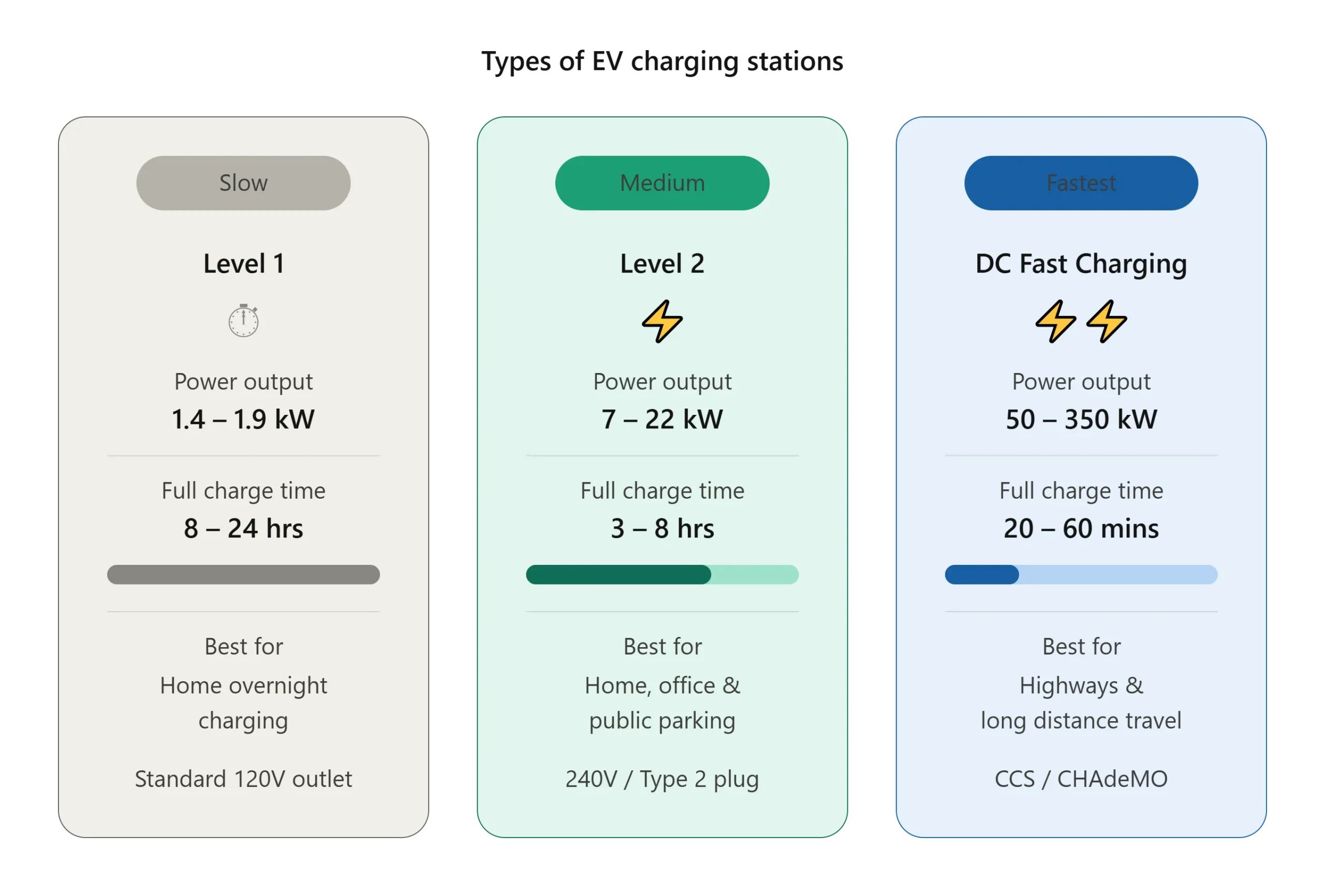
EV charging stations are generally classified into three levels based on charging speed and power output. These charging methods can help EV owners choose the most practical solution for their needs.
Level 1 Charging
Level 1 charging uses a standard household electrical outlet and is the simplest way to charge an electric vehicle. It typically delivers 1–2 kW of power, making it the slowest charging option.
For drivers with short daily commutes, Level 1 charging may be enough. However, charging a fully depleted battery can take more than 20 hours. While convenient, it is generally best suited for occasional charging or vehicles with lower daily mileage requirements.
Level 2 Charging
Level 2 charging is the most common solution for home, workplace, and public EV charging stations. It uses dedicated charging equipment and provides significantly more power than Level 1 chargers, typically ranging from 7 kW to 22 kW.
For most EV owners, Level 2 charging offers the best balance between convenience and charging speed. Depending on the vehicle and charger capacity, it can often recharge a battery overnight or add substantial driving range within a few hours. As a result, Level 2 chargers play a major role in modern charging infrastructure.
DC Fast Charging
DC Fast Charging is the fastest EV charging method available today. Instead of relying on the vehicle’s onboard charger, it delivers high-voltage DC power directly to the battery. Many public fast chargers provide between 50 kW and 350+ kW of power.
This allows many EVs to charge from 20% to 80% in as little as 20 to 40 minutes, depending on battery size and charging capability. DC Fast Charging is ideal for highway travel, commercial fleets, and drivers who need to minimise charging time.
Common Automotive Charging Problems and Solutions
Automotive charging problems can prevent a vehicle from starting, reduce battery life, and affect the performance of electrical systems.
Dead Battery
A dead battery is one of the most common charging system issues. It can occur due to age, extreme temperatures, leaving lights on, or a charging system failure. Signs include slow engine cranking, dim headlights, and difficulty starting the vehicle. Testing the battery voltage can help determine whether the battery needs charging or replacement.
Failing Alternator
The alternator is responsible for generating electricity and recharging the battery while the engine runs. If it fails, the battery will gradually lose power. Common symptoms include flickering lights, weak electrical performance, unusual noises, and a battery warning light on the dashboard. In most vehicles, the charging system should produce between 13.5 and 14.5 volts when the engine is running.
Corroded Battery Terminals
Corrosion on battery terminals can interrupt the flow of electricity between the battery and the vehicle’s electrical system. This may cause starting issues, poor charging performance, or intermittent electrical faults. Cleaning the terminals and ensuring secure connections can often resolve the problem.
EV Charging Station Issues
Electric vehicle owners may encounter charging station problems such as damaged connectors, communication errors, power interruptions, or incompatible charging equipment. Checking the charging cable, restarting the charger, or using another station can help identify the source of the issue.
Dashboard Warning Lights
A battery or charging system warning light is often the first sign of trouble. While the battery may appear to be the problem, the root cause could be a faulty alternator, voltage regulator, or damaged wiring. Prompt diagnosis can prevent a minor issue from turning into a complete charging system failure.
The Future of Automotive Charging
The future of automotive charging is focused on making charging faster, smarter, and more convenient.
Smart Charging
Smart charging uses software and connected systems to optimise when and how an EV charges. It can automatically schedule charging during off-peak hours, reduce electricity costs, and balance energy demand on the grid. This helps improve charging efficiency while supporting a more reliable power network.
Vehicle-to-Grid (V2G) and Bidirectional Charging
Bidirectional charging allows electricity to flow both into and out of an EV battery. This technology supports Vehicle-to-Grid (V2G) systems, where parked EVs can return stored energy to the grid when demand is high.
For example, an EV could charge overnight when electricity rates are lower and supply energy back to the grid during peak periods. This approach can improve grid stability and create new value for EV owners.
Ultra-Fast Charging
Ultra-fast chargers are reducing charging times significantly. Modern charging stations can deliver more than 350 kW of power, allowing compatible EVs to add substantial driving range in minutes rather than hours. As battery technology improves, charging speeds are expected to become even faster.
Wireless Charging
Wireless charging eliminates the need for cables by transferring energy through electromagnetic fields. Drivers simply park over a charging pad, and the vehicle begins charging automatically. While still developing, this technology could make EV charging more convenient for homes, workplaces, and public locations.
Bottom Line
Automotive charging includes both traditional vehicle charging systems and electric vehicle charging technologies. While conventional vehicles use an alternator, battery, and voltage regulator to generate and manage electricity, EVs rely on external chargers to recharge their battery packs.
How these charging systems work can help improve vehicle reliability, diagnose common charging problems, and support better maintenance decisions. As charging technology continues to advance, drivers can expect faster, smarter, and more efficient charging solutions in the years ahead.