EV Battery Charging System: Types, Working and Charging Levels

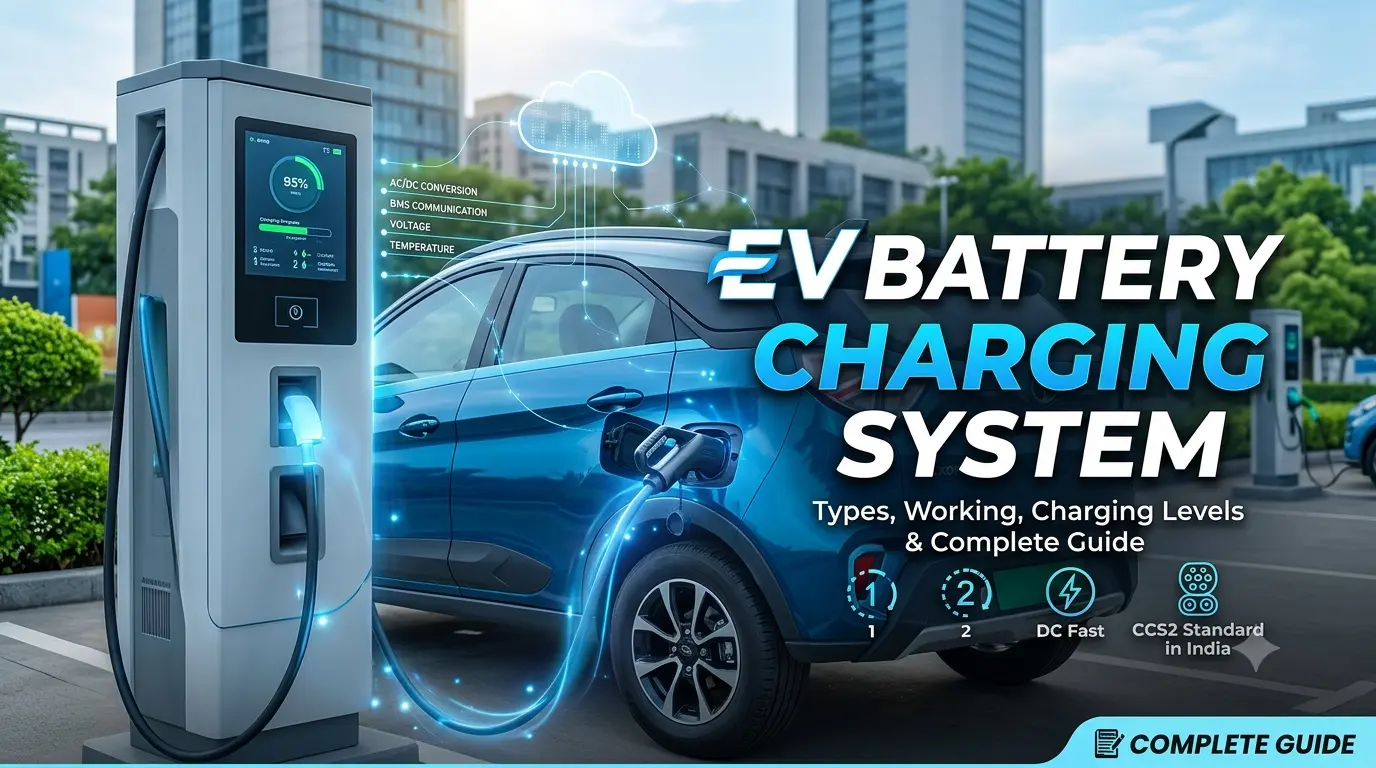
Electric vehicles are becoming more common. However, many drivers still do not understand how the EV battery charging system works. Knowing how your battery charging system operates helps you charge safely, reduce charging time, and protect your battery for years.
An electric vehicle charging system does more than transfer electricity. It manages power flow, monitors battery health, and controls charging speed to keep your EV safe and efficient. As a result, a reliable EV charging system improves performance and extends battery life.
In this blog, you will learn how an EV battery charging system works, its main components, different charging levels, AC vs. DC charging, charger types, charging techniques, and charging standards used in India. First, let’s understand what an EV battery charging system is and why it is essential for every electric vehicle owner.
What Is an EV Battery Charging System?
An EV battery charging system safely transfers electricity from the power grid to your vehicle’s battery. It controls voltage, current, and temperature throughout the charging process. As a result, the battery charging system ensures fast, efficient, and safe charging while protecting the battery from damage.
Unlike a traditional fuel system, an electric vehicle charging system uses intelligent hardware and software to deliver the right amount of power. It also communicates with the vehicle to adjust charging speed based on the battery’s condition. Therefore, every charging session remains safe and efficient.
A typical EV charging system includes several key components that work together:
- Charging Station (EVSE): Supplies electricity and manages communication between the charger and the vehicle.
- Charging Connector: Creates a secure connection between the charging station and the EV.
- Onboard Charger (OBC): Converts AC electricity into DC power during AC charging.
- Battery Management System (BMS): Monitors battery temperature, voltage, and charging status to prevent overheating and overcharging.
- Lithium-ion Battery Pack: Stores electrical energy and powers the electric motor.
The charging process follows a simple flow:
Power Grid → Charging Station → Charging Connector → Onboard Charger (AC Charging) → Battery Management System → Battery Pack
How an EV Battery Charging System Works
An EV charging system follows a smart charging process that delivers the right amount of power to your vehicle. It constantly communicates with the battery to ensure safe, efficient charging. As a result, the battery charging system prevents overheating, overcharging, and unnecessary battery wear.
Here’s how the process works:
- Connect the Charger: Plug the charging connector into your EV. The charging session begins after a secure connection.
- Authenticate the Connection: The charger identifies the vehicle and checks whether charging can start safely.
- Communicate with the BMS: The charging station exchanges data with the Battery Management System (BMS). The BMS checks the battery’s temperature, voltage, and state of charge.
- Start Charging: Once everything is safe, electricity flows from the charger to the battery. During AC charging, the onboard charger converts AC power into DC power.
- Adjust Charging Speed: The BMS continuously monitors battery conditions. Therefore, it automatically increases or reduces charging speed to protect the battery.
- Complete the Charging Session: Charging stops when the battery reaches the selected charge level or 100%.
EV Charging Levels Explained
EV charging levels determine how quickly your electric vehicle charges. The charging speed depends on the power output, voltage, and the charger’s technology. Choosing the right charging level helps reduce charging time while matching your daily driving needs and travel plans.
Level 1 Charging
Level 1 charging uses a standard 120V household socket and is the slowest charging option. It delivers around 1.4–1.9 kW of power and adds approximately 6–10 km of driving range per hour. Therefore, it is best for plug-in hybrid vehicles or EV owners with low daily mileage. However, it may take more than 24 hours to fully charge a larger battery.
Level 2 Charging
Level 2 charging uses a 240V power supply at homes or commercial locations. It delivers 7–22 kW of power and typically adds 30–50 km of range per hour. As a result, most EV owners prefer Level 2 charging for everyday use. It offers the right balance between charging speed, convenience, and installation cost.
DC Fast Charging
DC Fast Charging supplies 50–350+ kW of direct current to the battery. Unlike AC charging, it bypasses the vehicle’s onboard charger. Therefore, it can charge most EVs from 20% to 80% in about 20–45 minutes. It is the ideal choice for highway travel, commercial fleets, and drivers who need a quick recharge during long journeys.
EV Charging Levels Comparison
| Charging Level | Voltage | Power Output | Charging Speed | Best For |
|---|---|---|---|---|
| Level 1 (AC) | 120V | 1.4–1.9 kW | 6–10 km of range/hour | Plug-in hybrids and occasional charging |
| Level 2 (AC) | 240V | 7–22 kW | 30–50 km of range/hour | Daily home and workplace charging |
| DC Fast Charging | 400V–1000V | 50–350+ kW | 20–80% charge in 20–45 minutes | Highways, public charging stations, and long-distance travel |
AC vs DC Charging: What's the Difference?
AC charging and DC charging both charge an EV battery, but they differ in where electricity converts from AC to DC. During AC charging, the vehicle’s onboard charger performs the conversion. During DC charging, the charging station converts the electricity before sending it directly to the battery. As a result, DC charging is much faster.
With AC charging, electricity from the power grid enters the EV through the charging cable. The onboard charger (OBC) converts AC power into DC power because the battery stores only DC electricity. Therefore, charging speed depends on the capacity of the onboard charger.
In DC charging, the conversion happens inside the charging station. The station delivers DC power directly to the battery and bypasses the onboard charger. As a result, the battery charges much faster, making DC charging ideal for long trips.
| Feature | AC Charging | DC Charging |
|---|---|---|
| Power Conversion | Inside the vehicle (OBC) | Inside the charging station |
| Charging Speed | Slower | Much faster |
| Typical Power Output | 3.3–22 kW | 50–350+ kW |
| Best For | Daily home and workplace charging | Highways and long-distance travel |
Main Components of an EV Battery Charging System
An EV battery charging system includes several components that work together to charge your vehicle safely and efficiently. Each part has a specific role, from delivering electricity to monitoring battery health. Together, these EV charging system components ensure reliable charging and help extend battery life.
- Charging Station (EVSE): Supplies electricity to the vehicle. It also manages communication between the charger and the EV.
- Charging Connector: Connects the charging station to the vehicle. It ensures a secure and safe power transfer.
- Charging Cable: Carries electricity from the charger to the EV. It is designed to handle high power safely.
- Onboard Charger (OBC): Converts AC electricity into DC power during AC charging. It controls how much power enters the battery.
- Battery Management System (BMS): Monitors battery voltage, temperature, and charge level. It prevents overcharging and protects battery health.
- Lithium-ion Battery Pack: Stores electrical energy for the vehicle. It powers the electric motor and other electrical systems.
- Charging Software: Manages charging sessions and monitors performance. It also enables features like remote monitoring, scheduled charging, and mobile app control.
Types of EV Battery Chargers
The types of EV chargers differ in charging speed, installation, and intended use. Choosing the right EV battery charger depends on where you charge, how often you drive, and how quickly you need to recharge your vehicle.
- Portable Charger: Comes with most EVs and plugs into a standard power outlet. It is ideal for emergency use or occasional charging while travelling.
- Home Wall Charger: Installs at your home and usually supports Level 2 charging. It offers faster charging and is the best choice for daily EV owners.
- Public AC Charger: Found in offices, malls, hotels, and public parking areas. It is suitable for topping up your battery during everyday activities.
- DC Fast Charger: Delivers high-power DC electricity directly to the battery. It is perfect for highways and long-distance travel because it charges much faster.
- Ultra-Fast Charger: Provides up to 350 kW of power for compatible EVs. It significantly reduces charging time and is ideal for commercial charging hubs.
| Charger Type | Charging Speed | Best Use Case |
|---|---|---|
| Portable Charger | Slow | Emergency and occasional charging |
| Home Wall Charger | Medium | Daily home charging |
| Public AC Charger | Medium | Workplaces and public parking |
| DC Fast Charger | Fast | Long-distance travel |
| Ultra-Fast Charger | Very Fast | Commercial hubs and premium EVs |
EV Battery Charging Techniques
Modern battery charging techniques help EVs charge faster while protecting battery health. Instead of supplying maximum power continuously, EV charging technology adjusts the charging process based on the battery’s condition. As a result, the battery charges safely and efficiently and lasts longer.
- Constant Current (CC): The charger delivers a steady current during the initial charging stage. This method quickly restores most of the battery’s capacity.
- Constant Voltage (CV): Once the battery reaches a certain charge level, the charger maintains a fixed voltage. Meanwhile, the charging current gradually decreases to prevent overcharging.
- CC-CV Charging: Most modern EVs use a combination of Constant Current and Constant Voltage. This approach balances charging speed with long-term battery health.
- Smart Charging: Smart chargers communicate with the vehicle to adjust charging speed based on battery temperature, electricity demand, and charging conditions.
- Scheduled Charging: Drivers can set charging times through the vehicle or a mobile app. This feature helps reduce electricity costs and supports off-peak charging.
EV Charging Connectors & Standards
EV charging standards define how an electric vehicle connects to a charging station safely and efficiently. Choosing the correct connector ensures fast, reliable charging and compatibility with your EV. In India, CCS2 charging has become the standard for most modern electric cars and public charging stations.
- CCS2 (Combined Charging System): Supports both AC and DC charging through a single port. It is the primary fast-charging standard in India and is compatible with most new EVs.
- Type 2 Connector: Used mainly for AC charging at homes, workplaces, and public charging stations. Many EVs in India use a Type 2 connector for regular charging.
- CHAdeMO: An older DC fast-charging standard used by some Japanese EV models. However, its adoption is declining as CCS2 becomes more common.
- NACS (North American Charging Standard): Developed by Tesla for the North American market. Although it is gaining global attention, it is not widely used in India.
| Connector Standard | Charging Type | Best For | Common in India |
|---|---|---|---|
| CCS2 | AC & DC | Most modern EVs | ✔ Yes |
| Type 2 | AC | Home and public charging | ✔ Yes |
| CHAdeMO | DC | Older Japanese EVs | Limited |
| NACS | AC & DC | Tesla vehicles | No |
Benefits of a Smart EV Battery Charging System
A smart EV charging system does more than charge your vehicle. It optimizes charging speed, protects the battery, and reduces energy costs. An intelligent charging system also uses real-time data to deliver a safer and more convenient charging experience.
- Faster Charging: Smart chargers adjust power delivery based on your EV’s charging capacity. This helps reduce charging time without compromising safety.
- Better Battery Health: The system monitors battery temperature and voltage throughout the charging session. As a result, it prevents overcharging and extends battery life.
- Lower Charging Costs: Smart scheduling allows charging during off-peak hours when electricity rates are lower. Therefore, you can save money on every charge.
- Remote Monitoring: Mobile apps let you start, stop, and track charging from anywhere. You can also receive notifications when charging is complete.
- Smart Scheduling: Set charging times that match your daily routine or electricity tariff. This feature adds convenience and improves energy efficiency.
- Load Balancing: The charger distributes available power efficiently when multiple EVs charge simultaneously. This prevents electrical overload.
- Improved Safety: The system continuously checks for faults, overheating, and power fluctuations. Consequently, every charging session remains safe and reliable.
Why Choose Chargze for EV Charging?
Chargze makes EV charging simple, reliable, and convenient for everyday drivers. Whether you charge during your daily commute or on a long journey, its growing EV charging network helps you find dependable charging solutions whenever you need them.
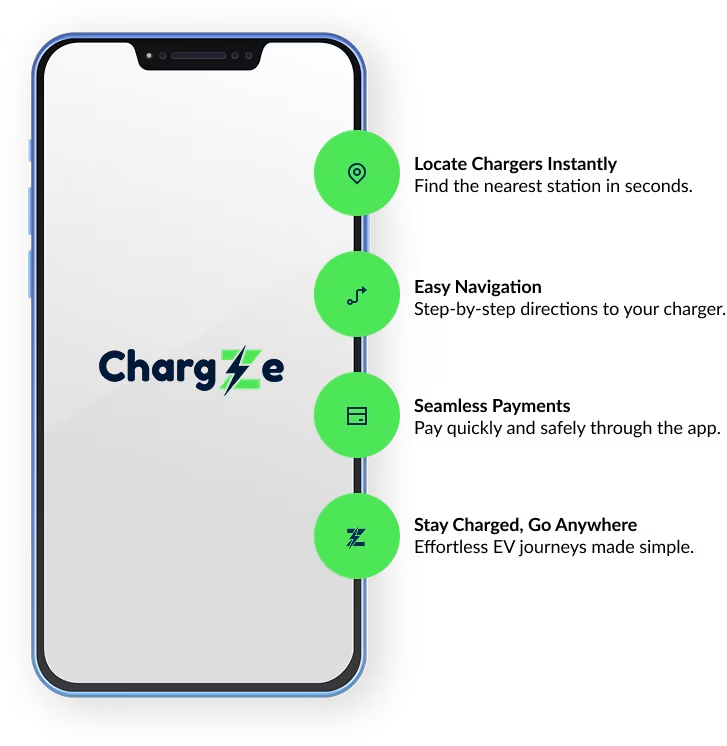
Chargze offers access to reliable EV charging stations across multiple locations. You can quickly locate nearby chargers through the mobile app and check live charger availability before you arrive. As a result, you spend less time waiting and more time on the road.
The Chargze app also provides a seamless charging experience. You can find stations, start charging sessions, track charging progress, and make secure digital payments from your smartphone.
If you’re planning your EV ownership journey, explore our guides on EV Charging Cost in India and the Best EV Charging Apps in India. Businesses looking to enter the EV sector can also learn more about our EV Charging Station Franchise opportunities.
With reliable infrastructure, smart technology, and an expanding EV charging network, Chargze helps make EV charging faster, easier, and more accessible across India.
Conclusion
An EV battery charging system plays a vital role in safe, efficient, and reliable electric vehicle charging. Understanding how the EV charging system works, choosing the right charger, and following the best charging practices can improve battery performance and extend its lifespan.
Whether you charge at home or use public charging stations, selecting the right charging solution makes every journey more convenient. If you’re looking for dependable EV charging across India, explore Chargze’s growing charging network, smart mobile app, and reliable charging solutions to enjoy a seamless EV ownership experience.