What Is CCS Charging? A Complete Guide for EV Owners in India

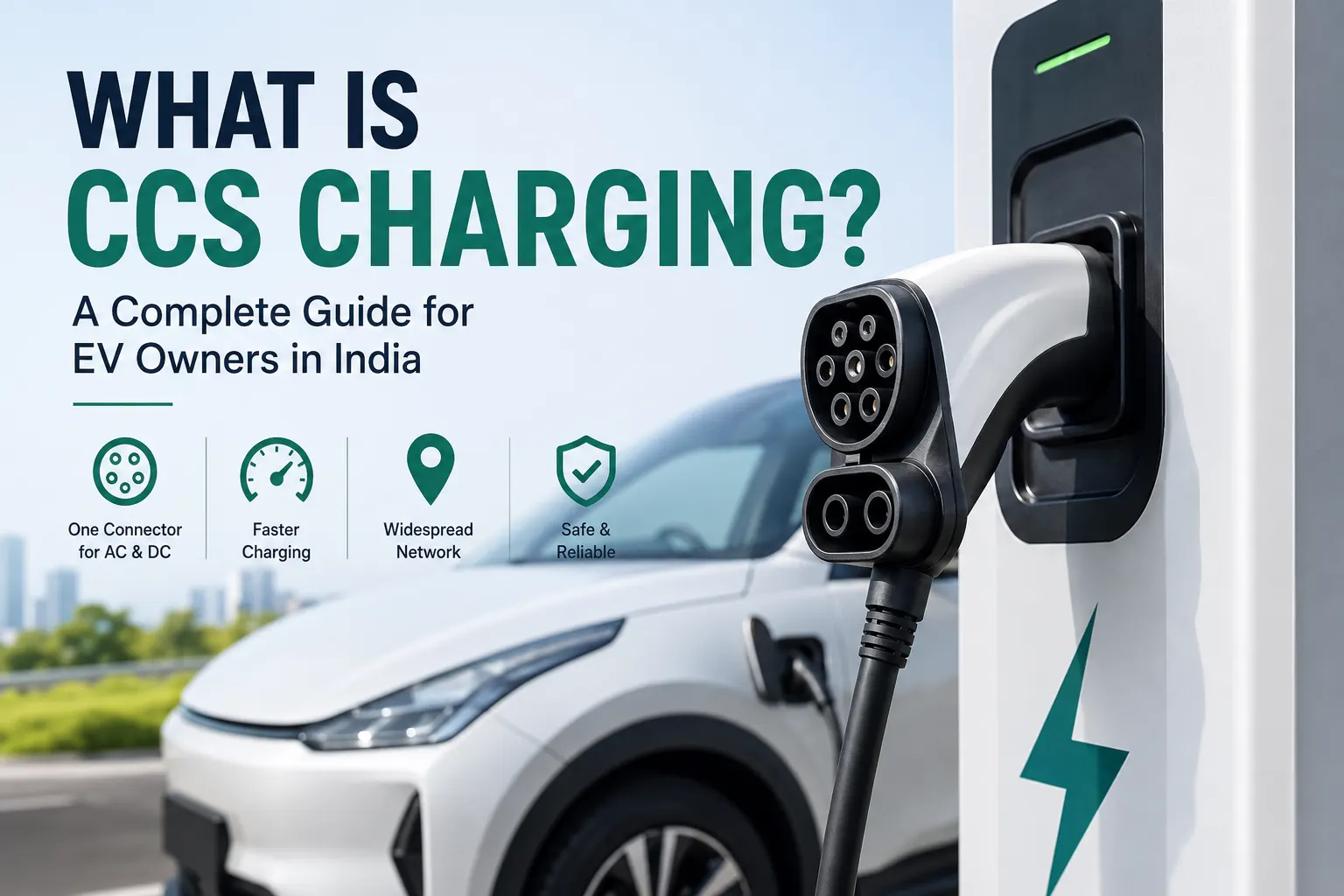
CCS charging is a connector standard that combines AC and DC charging in one plug. It lets your EV charge slowly at home and quickly on the road, all through a single port.
If you drive an EV in India, your car most likely uses this connector already. This guide explains what CCS charging means, how it works, and why it matters for Indian drivers using networks like Chargze.
How CCS Charging Works
A CCS connector has two sections built into one plug. The top part handles AC charging. The bottom part adds two extra pins for DC charging.
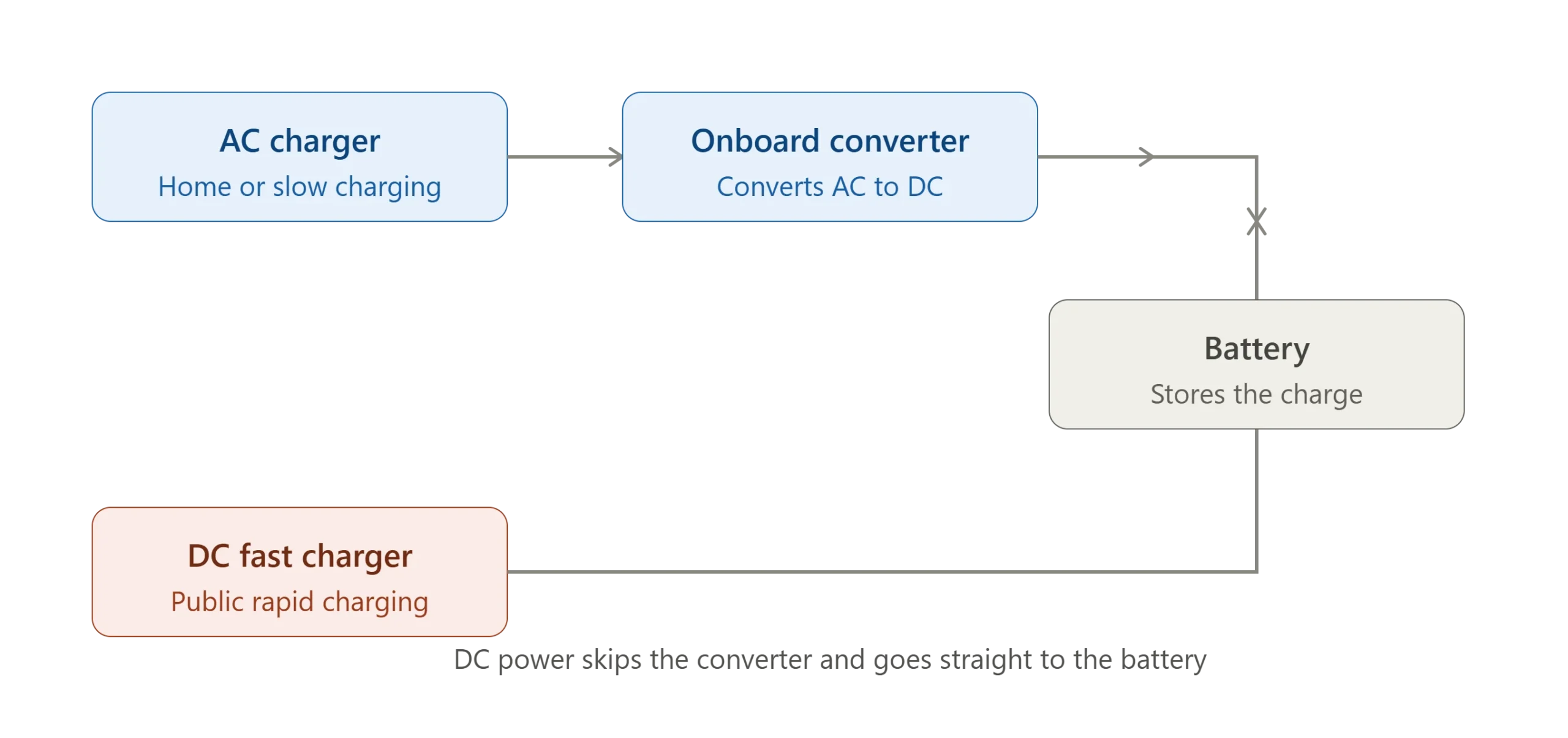
When you use an AC charger, power flows through the top pins first. It then passes through your car’s onboard converter before reaching the battery. This is the slower method, best suited for overnight charging at home.
When you use a DC fast charger, power flows through the bottom pins instead. It skips the onboard converter and goes straight to the battery. This is why DC charging feels so much faster.
Before any charging starts, your car and the charger talk to each other. Think of it as a quick check-in. They confirm details like voltage and current limits. Once both sides agree, charging begins automatically, with no extra steps needed from you. This process follows the CCS standard maintained by CharIN, the global body behind the connector.
CCS1 vs CCS2: What's the Difference?
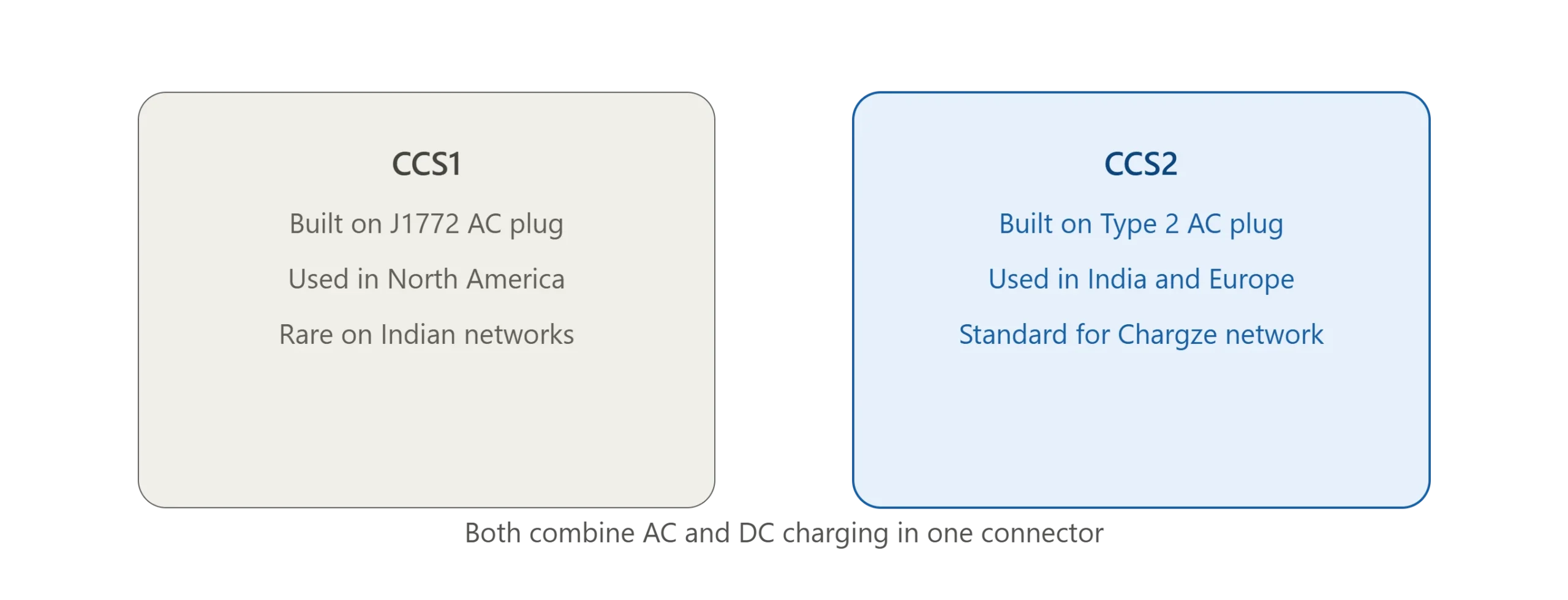
If you drive an EV in India, your car uses CCS2. This is the connector standard built into nearly every electric car sold here.
CCS2 builds on the Type 2 AC connector, which is already common across Europe and India. It adds two DC pins below the AC section for fast charging.
CCS1 works differently. It is used mainly in North America and builds on the J1772 AC connector instead of Type 2. You will rarely, if ever, see it on an Indian charging network.
Both versions do the same job. They combine AC and DC charging into one connector. The difference lies in which AC plug shape each one is built around.
Public charging networks in India, including Chargze stations, are built around CCS2, in line with India’s IS 17017 charging standard set by the Bureau of Indian Standards. This means most EV owners here can charge without worrying about adapters or mismatched connectors.
Is CCS Fast Charging?
Yes, CCS supports fast charging through its DC pins. This sets it apart from standard AC charging, which is much slower.
CCS fast chargers typically range from 50 kW to 350 kW globally. At these speeds, many EVs can charge from near empty to 80 percent in under an hour.
In India, most public fast chargers, including Chargze stations, fall in the 30 kW to 60 kW range. Actual charging time still depends on your car’s battery size and its current charge level.
CCS vs Type 2: What's the Difference?
Type 2 is an AC-only connector. It handles slow to moderate charging, usually up to 22 kW, and works well for home or overnight charging.
CCS2 is Type 2 with a fast-charging upgrade built in. It keeps the same AC section and then adds two extra pins for DC fast charging.
In simple terms, every CCS2 car can do everything a Type 2 car can do. It can also plug into a DC fast charger when you need a quicker top-up.
Can I Plug a Type 2 Into a CCS?
Yes, a Type 2 cable fits the AC section of a CCS port. Your car still needs a full CCS inlet to access the DC fast-charging pins.
Is CCS Faster Than Type 2?
Yes, CCS is faster because it adds DC fast charging on top of everything Type 2 already offers.
What Is the Difference Between AC and CCS Charging?
AC charging and CCS charging are not competing systems. CCS actually includes AC charging, then adds DC fast charging on top of it.
Here is a simple breakdown of how they compare:
| Feature | AC Charging | CCS Charging |
|---|---|---|
| Current type | Alternating Current only | Both AC and DC |
| Typical speed | Up to 22 kW | 50 kW to 350 kW in DC mode |
| Best use case | Home or overnight charging | Public fast charging on the go |
| Charging time | Several hours | Under an hour for most EVs |
CCS Charging in India
India has standardised on CCS2 for public DC fast charging. Nearly every electric car sold here today comes with a CCS2 inlet built in.
This standardisation makes charging simple for EV owners. You do not need adapters or extra cables at most public stations across the country.
Chargze operates CCS2-compatible fast chargers built for Indian roads and driving conditions. Whether you are commuting daily or planning a longer trip, you can find a nearby station through the Chargze station locator.
The Chargze network keeps growing across major cities and highways. This means more reliable access to fast charging, wherever your drive takes you.
How to Use a CCS Charger
Using a CCS charger is simple, even on your first try.
- Park close enough to reach the charging cable comfortably.
- Open your car’s charging port cover.
- Select the CCS connector on the charging unit.
- Plug the connector into your car’s port.
- Authenticate through the app or an RFID card.
- Wait for charging to start automatically.
- Unplug once your car reaches the charge level you want.
Most charging apps, including the Chargze app, let you track your session in real time and notify you once charging finishes.
Final Thoughts
CCS charging has become the backbone of EV infrastructure in India. Understanding how it works helps you charge smarter, at home and on the road.
As India’s charging network keeps expanding, CCS2 will remain the standard connector for most electric vehicles on Indian roads. Ready to find your nearest station? Explore the Chargze network and charge with confidence.
Frequently Asked Questions
Is CCS fast charging?
Yes, CCS supports DC fast charging up to 350 kW, though most public stations in India run lower, typically between 30 kW and 60 kW.
Can I plug a Type 2 into a CCS?
Yes, a Type 2 cable fits the AC section of a CCS port. You still need a full CCS inlet for DC fast charging.
Is CCS faster than Type 2?
Yes, CCS is faster because it adds DC fast charging on top of everything Type 2 already offers.
What is the difference between AC and CCS charging?
AC charging is slower and mainly used at home. CCS charging includes AC and adds DC fast charging for quicker public charging.