Wireless EV Charging: How It Works, Types, and What It Means for India

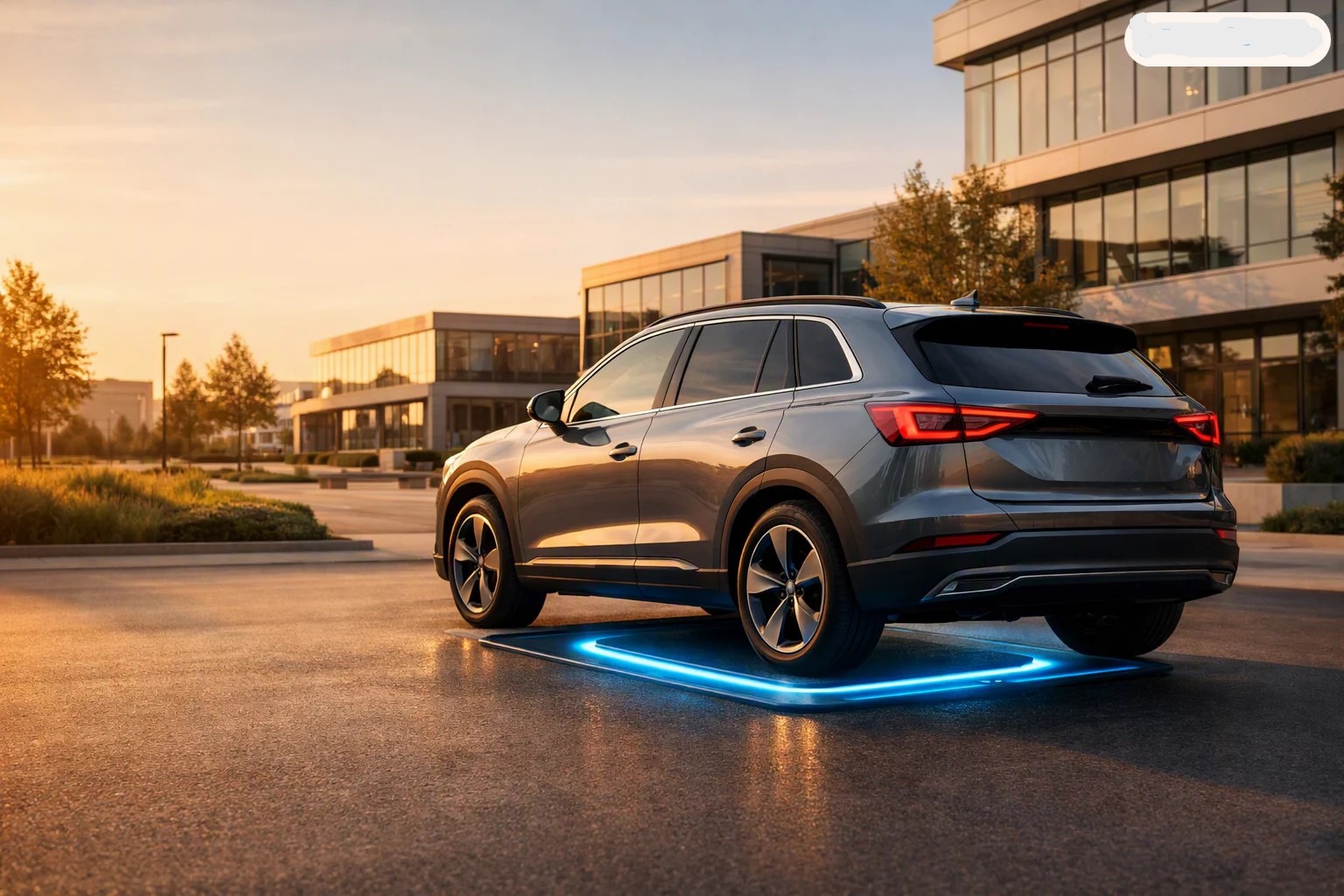
Electric vehicle owners still deal with cables every time they charge. Wireless EV charging is changing that. This technology lets your car charge without any plug or cord. You simply park over a charging pad. The energy transfers on its own. No cables, no fumbling in the rain, no worn-out connectors.
This technology already works in parts of Europe and Asia, and it’s part of the bigger shift happening across India’s EV charging infrastructure. Automakers are now building EVs with wireless charging in mind. India is watching closely too, as the country builds out its charging infrastructure.
In this guide, you will learn how wireless EV charging works. We will cover the different types, from static charging to dynamic charging on the move. You will also see how it compares to wired charging, and what it means for EV owners in India.
What Is Wireless EV Charging?
Wireless EV charging lets you charge your electric vehicle without plugging in a cable. Instead, energy passes through the air from a charging pad on the ground to a receiver built into your car.
The technology relies on a method called inductive charging. A coil in the ground pad creates a magnetic field. This field induces an electric current in a second coil fitted inside the vehicle. That current then charges the battery.
You don’t need to align a plug or handle a heavy cable. You just park your car over the pad, and charging starts automatically.
This matters for a simple reason. Charging becomes effortless. Drivers save time, avoid worn-out cables, and skip the hassle of charging in bad weather. For fleet operators and autonomous vehicles, it opens up charging without any human involvement at all. As EV adoption grows, this kind of convenience could shape how people choose to charge their vehicles in the years ahead.
How Wireless EV Charging Works
Wireless EV charging relies on a principle called electromagnetic induction. This same idea powers wireless phone chargers and induction cooktops, just at a much larger scale.
Here’s how it works. A transmitter coil sits inside a charging pad on the ground. When electricity flows through this coil, it creates a magnetic field.
A second coil, called the receiver coil, sits underneath the vehicle. As the magnetic field passes through this receiver coil, it generates an electric current. That current then flows into the car’s battery.
Both coils must operate at the same frequency for this transfer to work smoothly. This is where resonant charging comes in. The transmitter and receiver are tuned to resonate together, which allows energy to pass between them more efficiently, even with a small gap between the pad and the vehicle.
To keep this process safe and consistent across different car brands, the industry follows a standard called SAE J2954. This standard sets the technical rules for wireless charging, including the frequency range these systems should use, typically between 79 and 90 kHz. It also covers safety requirements, like detecting foreign objects between the coils and making sure charging stops if something gets in the way.
Because of this standard, an EV built by one manufacturer can, in theory, charge on a wireless pad built by another company. That kind of compatibility is essential if wireless charging is going to scale the way plug-in charging has.
In short, wireless EV charging turns a simple concept, magnetic induction, into a practical, standardised system that lets your car charge itself the moment you park.
Types of Wireless EV Charging
Wireless EV charging comes in two main forms. Each one serves a different purpose and sits at a different stage of development.
Static Wireless Charging
Static wireless charging works when your vehicle is parked. You pull into a spot, position your car over a charging pad embedded in the ground, and charging begins automatically.
This is the most common form of wireless charging for electric vehicles today. It already works in homes, offices, and fleet depots in several countries. Many automakers now design new EV models with a receiver coil built into the underside of the car, so the vehicle is ready for this technology from day one.
Static charging feels a lot like the wired Level 1 or Level 2 charging you already know, just without the cable. You still park and wait, but you skip the plug entirely.
Dynamic Wireless Charging of Electric Vehicles
Dynamic wireless charging is a technology that charges an EV while it drives, using charging coils embedded directly into the road surface. As the vehicle moves over these coils, it receives a continuous flow of energy, without ever needing to stop.
This approach could change how far EVs can travel. Imagine driving on a highway and topping up your battery the entire time, without a single stop at a charging station. That’s the promise dynamic charging holds.
However, this technology is still in its early stages. It requires significant investment in road infrastructure, since coils need to be built into highways and city streets. Only a handful of pilot projects exist worldwide today, mostly in Europe and parts of Asia.
Even so, dynamic charging points point toward a future where charging infrastructure and roads become the same. For now, it remains a promising idea rather than a widespread reality.
Wireless vs Wired EV Charging: Which Is Better?
Both charging methods get your EV powered up, but they work quite differently. Here’s how they compare across the factors that matter most.
| Factor | Wireless Charging | Wired Charging |
|---|---|---|
| Speed | Comparable to Level 1 or Level 2 charging | Ranges from Level 1 to DC fast charging (up to 175 kW) |
| Efficiency | Slightly lower due to energy loss during transfer | Higher, since power flows through a direct connection |
| Cost | Higher upfront cost for pad installation and vehicle compatibility | Lower upfront cost, widely available equipment |
| Convenience | Just park and charge, no cables involved | Requires plugging in manually every time |
| Availability | Limited, mostly in pilot programs and select regions | Widely available across homes, workplaces, and public stations |
Wired charging still wins on speed and cost today. DC fast chargers can add real range in minutes, something wireless systems can’t match yet. Wired infrastructure is also everywhere, from home outlets to public charging networks.
Wireless charging wins on convenience. You skip the cable entirely, avoid weather-related hassles, and let the car handle everything once you park. For now, if you’re looking for reliable charging today, explore Chargze’s EV charging solutions across India.
Benefits of Wireless Electric Charging
Wireless electric charging offers real advantages that go beyond simply skipping a cable. Here’s what makes it worth watching.
Effortless convenience
You just park your car over the pad, and charging starts on its own. There’s no cable to untangle, no connector to align, and no need to remember to plug in every night. For daily drivers, this small change removes a repetitive task from their routine.
Built for autonomous vehicles
Self-driving cars can’t plug themselves in, at least not easily. Wireless charging solves this problem completely. An autonomous vehicle can simply park itself over a charging pad and begin charging without any human involvement. This makes wireless charging a natural fit as autonomous fleets and robotaxis become more common.
Weather resilience
Charging with a cable in heavy rain or extreme cold isn’t pleasant. Wireless charging removes that problem entirely. Since there’s no physical connection to make, drivers never have to handle a cable or connector in bad weather. The charging pad and receiver coil stay sealed and protected, regardless of what’s happening outside.
Together, these benefits point toward a charging experience that requires less effort and less attention from the driver. As the technology matures, this convenience could become one of the biggest reasons EV owners choose wireless charging over traditional plug-in methods.
Challenges and Limitations
Wireless EV charging holds real promise, but it still faces a few practical hurdles before it can compete with wired charging at scale.
Efficiency loss
Energy transfer through the air isn’t as efficient as a direct cable connection. Some power gets lost as it moves from the transmitter coil to the receiver coil. While resonant charging systems have improved this over time, wireless charging still lags slightly behind wired methods in overall efficiency.
Alignment precision
The transmitter and receiver coils need to line up correctly for charging to work well. Even a small gap or misalignment can reduce how much power actually transfers. Not every driver parks in the same spot each time, which means some systems rely on guided parking assistance to help drivers position their vehicle correctly.
Cost of infrastructure
Installing wireless charging pads costs more than setting up a standard wired charger. This is especially true for dynamic wireless charging, since it requires embedding coils directly into roads. Building this kind of infrastructure across highways and city streets demands significant investment, which slows down how quickly the technology can spread.
These challenges don’t rule out wireless charging as a long-term solution. But they do explain why adoption remains slow, and why wired charging will likely stay the dominant method for the next several years.
Is Wireless EV Charging Available in India?
Wireless EV charging has not reached commercial rollout in India yet. Right now, the country’s charging infrastructure runs almost entirely on wired systems, with public charging stations crossing 29,000 installations as of early 2026, up from about 5,000 in 2022.
That said, wireless charging isn’t off the radar. Industry coverage shows India’s charging sector is exploring emerging technologies, including wireless and in-road charging innovations, as it adapts global trends to local needs. This signals early interest, even if no large-scale pilot has launched yet.
Globally, the picture looks further along. Companies like WiTricity have moved from retrofitting vehicles like the Ford Mustang Mach-E and Tesla Model 3 to deploying commercial pilots on electric golf carts and light vehicles. Countries like Sweden have already tested dynamic wireless charging on public roads, with plans to expand their electric road network significantly by 2035.
For India, a realistic timeline looks different. The country’s immediate focus remains on scaling wired infrastructure, especially DC fast charging along highways, since India needs an estimated 1.32 million public charging stations by 2030 to hit its 30 percent EV penetration target, more than 40 times what exists today. Wireless charging will likely follow only after this foundational network matures, and after global costs come down enough to make sense for Indian deployment.
For now, wireless charging in India remains a technology to watch rather than one to expect soon. As charging networks like Chargze expand and interoperability improves across the country’s public charging infrastructure, wireless charging could become the next major step once the basics are firmly in place.
The Future of EV Charging: Wireless and Beyond
Wireless charging is one piece of a much bigger shift happening in EV charging. The real challenge isn’t just how energy gets to your car. It’s how easily you can find and access that charging, no matter which network operates it.
This is where interoperability comes in. As more charging technologies emerge, from wireless pads to ultra-fast DC chargers, drivers need one simple way to access all of them. Nobody wants to juggle multiple apps or worry about compatibility every time they charge.
E-roaming networks solve this problem today, and they will matter even more as wireless charging grows. An e-roaming platform connects different charging networks and operators into a single, unified system. You get access to a wide range of chargers through one app, one account, and one seamless experience, regardless of who owns the station.
Chargze already builds this kind of connected experience for wired charging across India. As wireless charging matures and starts appearing at homes, offices, and public spaces, the same principle will apply. Drivers will want that technology folded into one connected network, not scattered across separate systems.
The future of EV charging isn’t just about new methods like wireless transfer. It’s about making every charging option, wired or wireless, work together through one reliable network. That’s the direction the industry is heading, and it’s the foundation Chargze is already building toward.
Frequently Asked Questions
How does wireless EV charging work?
Wireless EV charging works through electromagnetic induction. A transmitter coil in the charging pad creates a magnetic field. This field induces an electric current in a receiver coil fitted inside the vehicle, which then charges the battery. No physical cable or plug is involved.
Is wireless EV charging safe?
Yes, wireless EV charging is safe. Systems follow the SAE J2954 standard, which sets strict rules for frequency ranges and safety features. These systems include foreign object detection, which automatically stops charging if something gets between the coils.
Is wireless EV charging available in India?
Wireless EV charging has not reached commercial rollout in India yet. The country’s charging infrastructure currently runs on wired systems, with over 29,000 public charging stations installed as of early 2026. Wireless charging remains an emerging technology that India is watching closely.
What is dynamic wireless charging?
Dynamic wireless charging is a technology that charges an EV while it drives, using charging coils embedded into the road surface. As the vehicle moves over these coils, it receives a continuous flow of energy without stopping. This technology is still in early pilot stages worldwide.
How much does wireless EV charging cost?
Wireless EV charging costs more than wired charging today. Installing a charging pad requires higher upfront investment, and vehicles need a compatible receiver coil. Dynamic wireless charging costs even more, since it requires embedding coils into roads.